Showing posts with label Media Consumption. Show all posts
15 January 2015
12 January 2015
Inspiration: Random Little YouTube Animation
This video is gorgeous, and the painting looks liek it could have been done by hand in photoshop or something! I love this aesthetic, it looks delicate which contrasts beautifully with the intense action.
6 January 2015
Adventure Time - The Art of Ooo 2
Below are a lot of guidelines on the drawing of the main characters; Finn and Jake, by the show's creators. They are used to help the animators keep their work consistent and the look of the show always fluid. I am already totally in love with this book, as it not only shows finished pieces and grabs from the show, but also all of the concept and development art. It discusses the processes the artists had to go through to create and finalize all of their characters and worlds, which is super useful to me!
Adventure Time: The Art of Ooo 1
The two above images are exterior views of the Treehouse, Home to Finn and Jake. It shows the scene during two different times of day: one in the dark of night and one in the soft glow of sunrise. i love how the colours change between the two and give a distinctive mood to each picture.
Interior to the Treehouse - background work. The photo quality here is awful, but I loved how it was a wide-angle view of the room. I want to use the wood paneled walls and tree trunk stabilizing pillars as inspiration for the Woodcutter's cabin.
5 January 2015
Trailer: Song of the Sea
By cartoon Saloon and Tom Moore (of the Secret of Kells fame)
I haven't been able to watch it yet as it hasn't come out in Ireland on general release and I can't find it online to my disappointment, so I'll have to make do with the trailer for now. It looks visually very similar to the Secret of Kells with the forced perspective, 2D flattened style. Some of the elements such as the round character heads, the centering of many subjects, and the theme of peering through doors/windows reappear also. The light is also used to great effect in dappling and reflections on water ripples.
3 January 2015
The Art of Victoria Ying
All below images were sourced from Victoria's Twitter handle @victoriaying
This above one I particularly love, because of its simplicity yet it evokes so much emotion and so many feelings. The style is really clear without being too complex. After seeing this image it got me thinking about making colour in my story really prominent, and perhaps using it a lot more obviously. Perhaps different scenes could be block coloured in different groups of shades corresponding to the plot or the mood of it?
The image at the bottom of this post in purple has the same effect. it is unrealistic but still believable. The colours add another dimension of meaning and feeling.
This above one I particularly love, because of its simplicity yet it evokes so much emotion and so many feelings. The style is really clear without being too complex. After seeing this image it got me thinking about making colour in my story really prominent, and perhaps using it a lot more obviously. Perhaps different scenes could be block coloured in different groups of shades corresponding to the plot or the mood of it?
The image at the bottom of this post in purple has the same effect. it is unrealistic but still believable. The colours add another dimension of meaning and feeling.
10 December 2014
The Simpsons' Tall Tales
"Simpsons Tall Tales" has been described as a "skewed" retelling of old tales. popular American folk tales have been re-mediated for a contemporary audience through the medium of cartoons. I wanted to study this as an example of how stories can be retold using animation, and the new options that are open to the story teller by way of this. The Simpsons are quite well known for retelling existing stories, when they have before covered the plays of Shakespeare, poems of Edgar Allen Poe and even bible tales. With a wide age-ranging audience and a comedic theme to it adds new and unique elements to many of these stories, and even sometimes subverts their original purpose. The writers take a great deal of liberties in the retelling.
The first segment is based on the mythological lumberjack Paul Bunyan, who carved Babe the Blue ox out of the Blue Mountains. The story first originated as a oral tale by North American loggers. The character first appeared in print form about a century ago, when mention of him was published in newspaper articles and such, before being used as a figurehead for advertising endeavors. The character grew in popularity up to the 60's and 70's, when he took on a distinguishable image. He became popular with children in particular; In 1958 Walt Disney Studios produced Paul Bunyan as an animated short musical. The full piece can be viewed here: https://www.youtube.com/watch?v=4CNtcDjywBA
The Disney version lasts over 15 minutes, so goes in to significantly more depth than the Simpsons telling. It comes from a more historically placed context, with a 'first person' story teller. This way it claims to be less fictitious than it actually is. The aesthetics are of key importance in this version. It also looks quite dated, employing the animation style typical of other 50's Disney pieces, with old-fashioned language used in the narration. The target audience seems like it would be young children.
In contrast, the Simpsons version relies more heavily on storytelling as opposed to aesthetic. Humour is used liberally, and carries the interest of the viewer. The animation style is more contemporary and practical rather than arty. It cuts out of a lot of the more mundane points of Paul Bunions life and focuses on the highlights. Paul is 'played' by Homer Simpsons, which combines the old and new in an interesting way. It takes liberties with the canon by adding new characters in to the story and humorous situations.
This episode is a neat example of how a cartoon can rehash a folktale in an entertaining way, making it appealing to modern audiences. In these examples, the essence of the tale is kept, while the characters and individual plot points can be changed dramatically.
The first segment is based on the mythological lumberjack Paul Bunyan, who carved Babe the Blue ox out of the Blue Mountains. The story first originated as a oral tale by North American loggers. The character first appeared in print form about a century ago, when mention of him was published in newspaper articles and such, before being used as a figurehead for advertising endeavors. The character grew in popularity up to the 60's and 70's, when he took on a distinguishable image. He became popular with children in particular; In 1958 Walt Disney Studios produced Paul Bunyan as an animated short musical. The full piece can be viewed here: https://www.youtube.com/watch?v=4CNtcDjywBA
The Disney version lasts over 15 minutes, so goes in to significantly more depth than the Simpsons telling. It comes from a more historically placed context, with a 'first person' story teller. This way it claims to be less fictitious than it actually is. The aesthetics are of key importance in this version. It also looks quite dated, employing the animation style typical of other 50's Disney pieces, with old-fashioned language used in the narration. The target audience seems like it would be young children.
In contrast, the Simpsons version relies more heavily on storytelling as opposed to aesthetic. Humour is used liberally, and carries the interest of the viewer. The animation style is more contemporary and practical rather than arty. It cuts out of a lot of the more mundane points of Paul Bunions life and focuses on the highlights. Paul is 'played' by Homer Simpsons, which combines the old and new in an interesting way. It takes liberties with the canon by adding new characters in to the story and humorous situations.
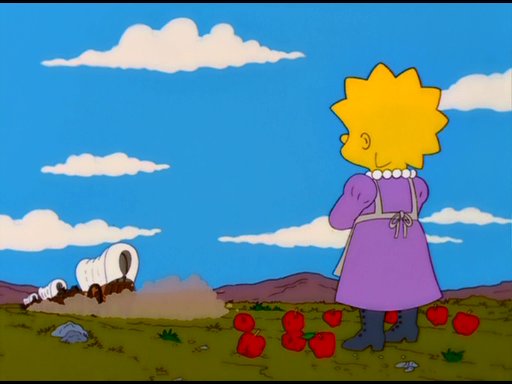
The second segment shows Lisa as Connie Appleseed, a female version of the American pioneer nurseryman Johnny Appleseed who introduced apple trees to large parts of Ohio,Indiana, and Illinois. He became an American legend while still alive. There have been numerous tellings and adaptations of his story, from plays, to guest appearances in books or tv. Again, in the Simpsons version, they adapt it very liberally for their own needs. Johnny becomes 'Connie' so that Lisa can 'play' the part of the main protagonist. Almost even more so than the first one, humour is used as a driving device in the narrative. The language used is quite modern, as the Simpsons would usually speak. The other characters are given parts in the tale as well.
"Tom and Huck" features Bart as Tom Sawyer and Nelson as Huckleberry Finn, both of whom are characters in Mark Twain's 1876 novel The Adventures of Tom Sawyer. Unlike the previous two, this is not based on a folktale; rather an actual novel. It is still interesting to see how the show adapts a popular American classic and makes it relevant and relateable to a modern TV audience. The writers make a point to use as much of the language and jargon in the books in this retelling, and the voice actors put on southern accents to better match the original location of the story. Because there is more definitive source material to base this part on than the previous few, it feels more true to the original and less liberties have been taken. This time, Tom sawyer is played by Bart, and Huckleberry Finn is played by Nelson. Humour features heavily yet again.
This episode is a neat example of how a cartoon can rehash a folktale in an entertaining way, making it appealing to modern audiences. In these examples, the essence of the tale is kept, while the characters and individual plot points can be changed dramatically.
6 December 2014
Bravest Warriors
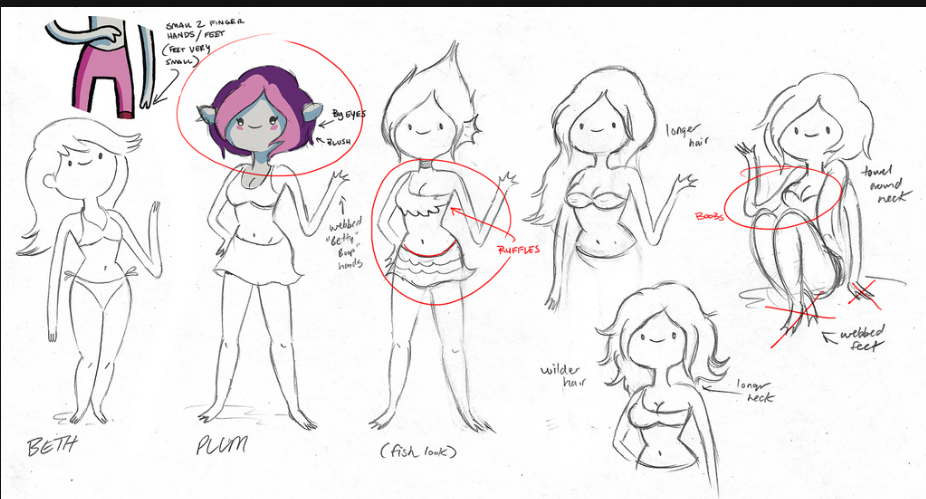
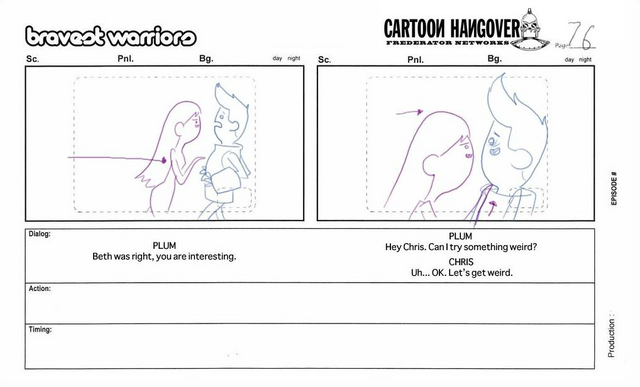
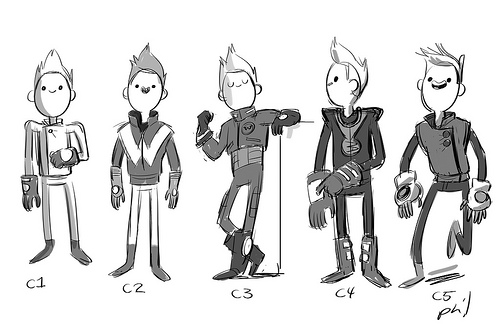
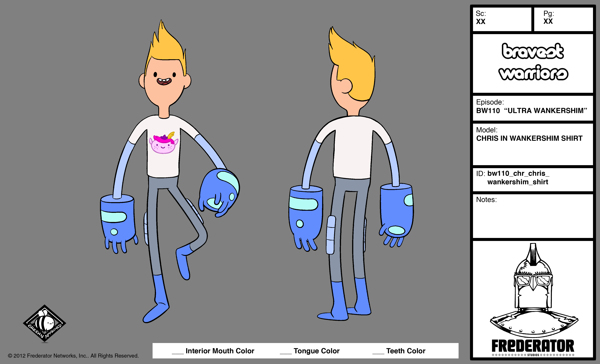
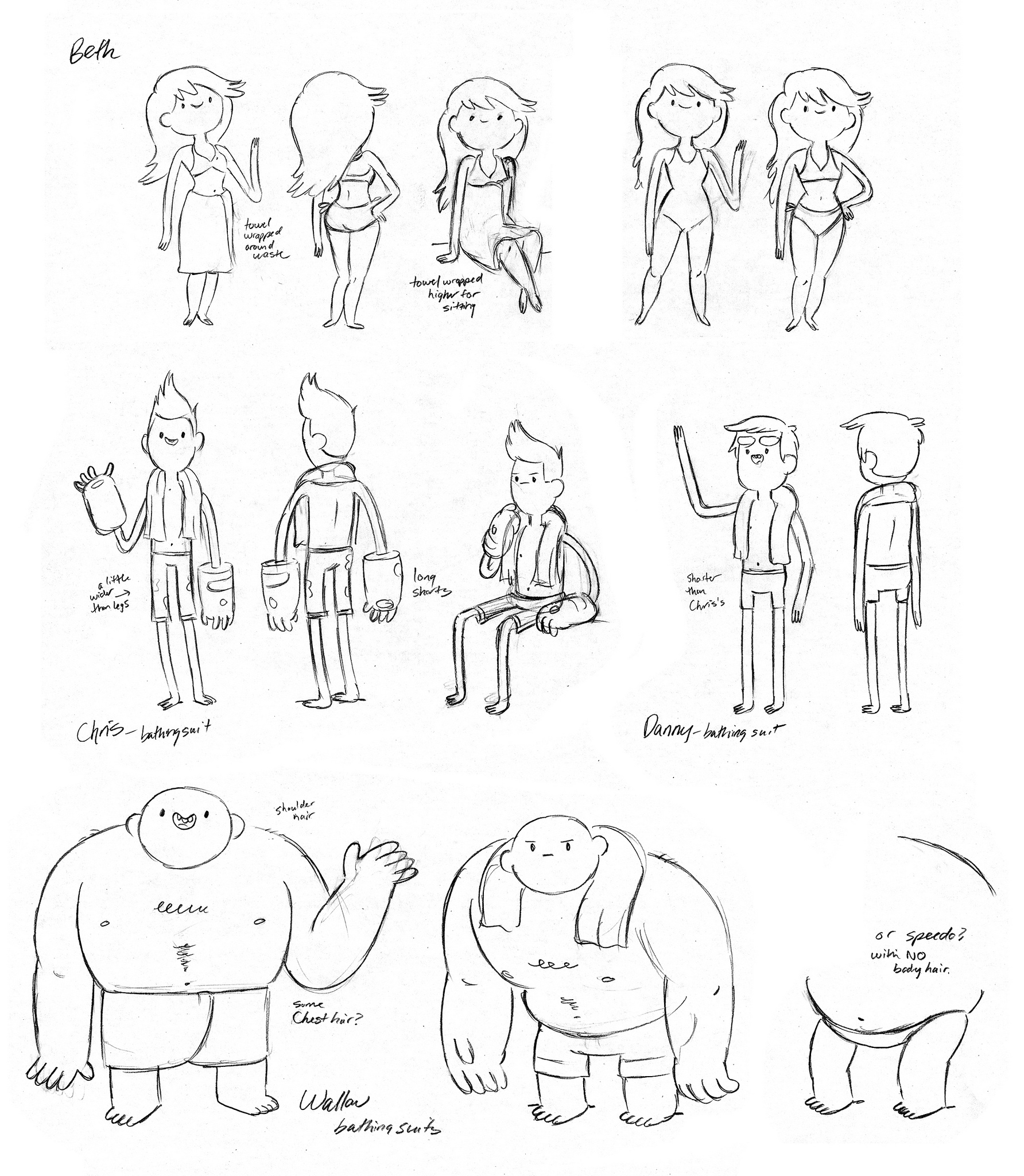
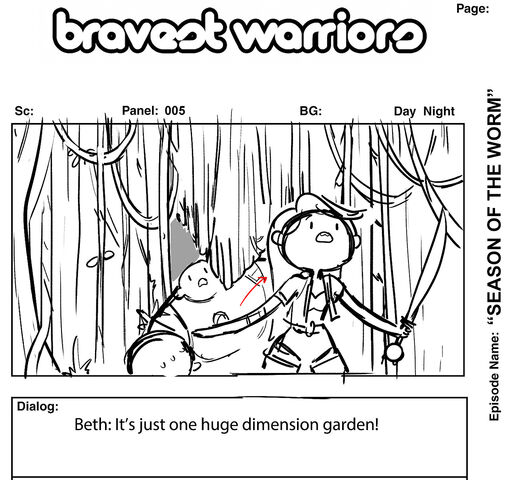
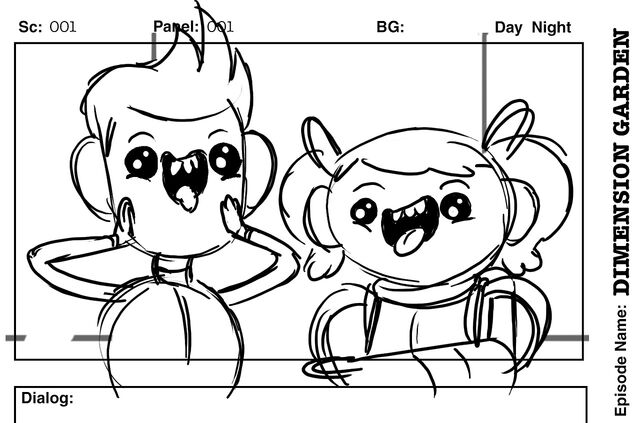
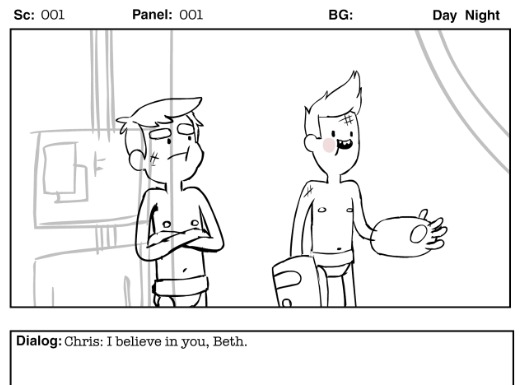
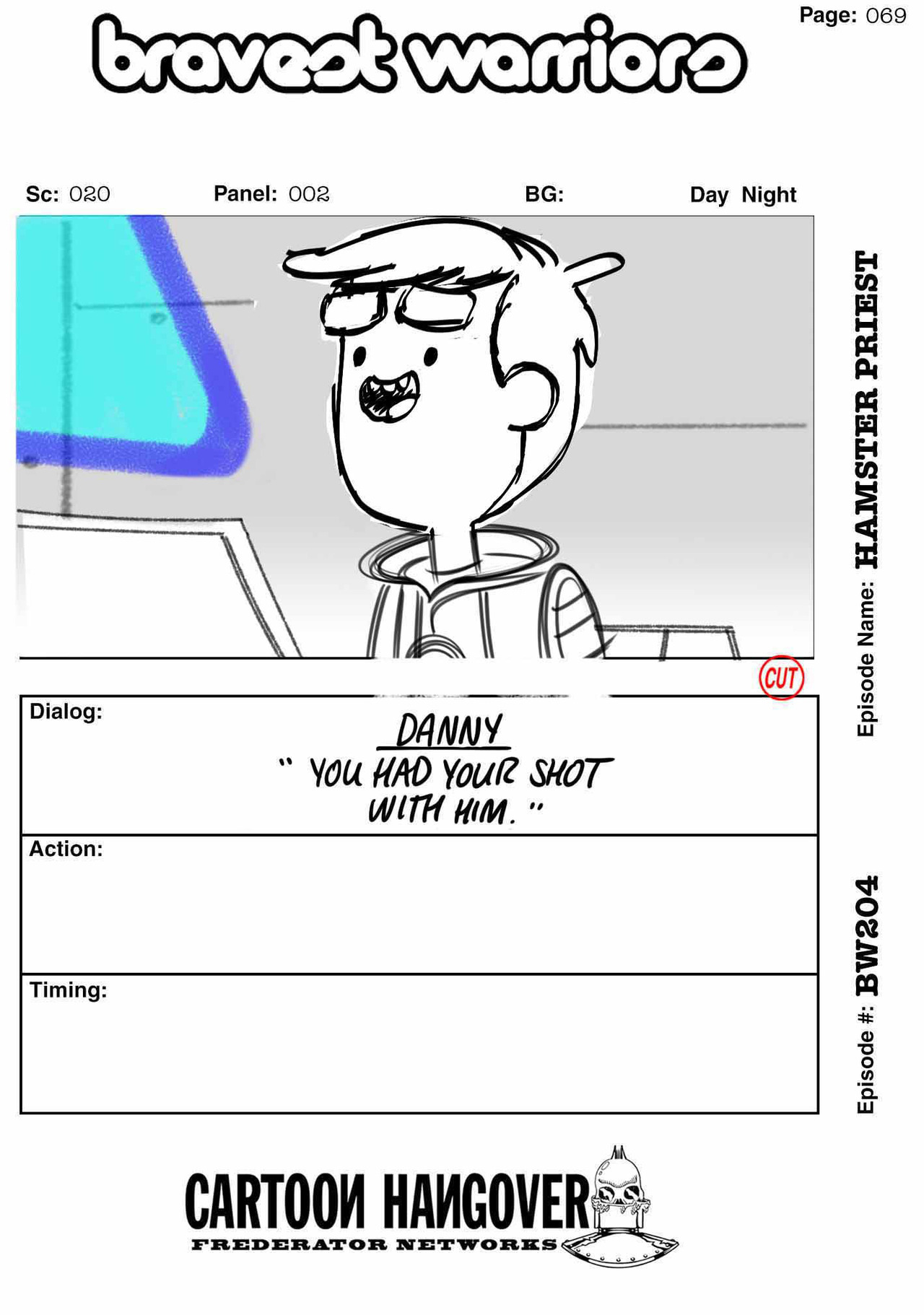
I came across another animated TV series by Pendleton Ward, the creator of Adventure Time. I didn't know this at first, until I started to notic a great many similarities between the two. They both feature flat, 2D scenery and figures, minimal shading, clean well-defined line work, and bright colours. The human characters have spaghetti-like limbs just like in adventure time, and large round faces with black oval shaped eyes. Of course, I looked it up and realised that they have the same creator. Bravest Warriors is created for Cartoon Hangover instead of Cartoon Network, which is like the mature version of the channel, hence BW has a more mature, adult audience. It has less structure than AT and the episodes are a lot shorter. Because it doesn't have the same constraints as AT, it can include sexual references, which is one of the most noticeable differences. They both contain human characters and anthropomorphic animals, as well as stranger imaginary creatures. The elements of fantasy keep the show interesting.
I watched all of the first season on YouTube in just over an hour. Its very addictive and I got into the nonsensical plot lines and wacky characters straight away.
Character design source: bravestwarriors.wikia.com/wiki/File:Bravest_Warriors_Bathing_Suits.jpg
I watched all of the first season on YouTube in just over an hour. Its very addictive and I got into the nonsensical plot lines and wacky characters straight away.
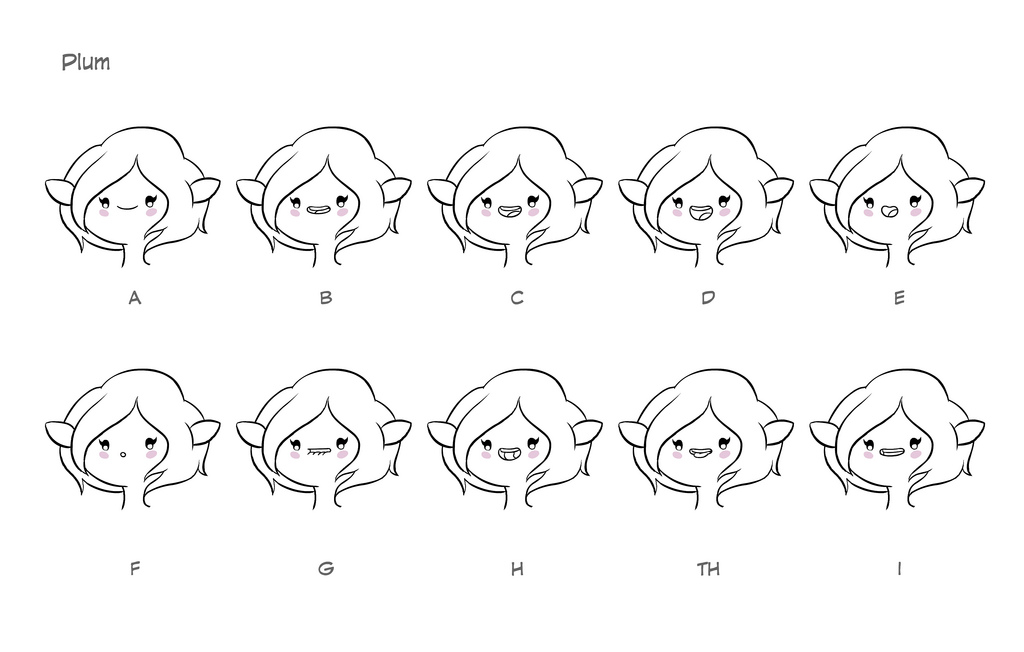
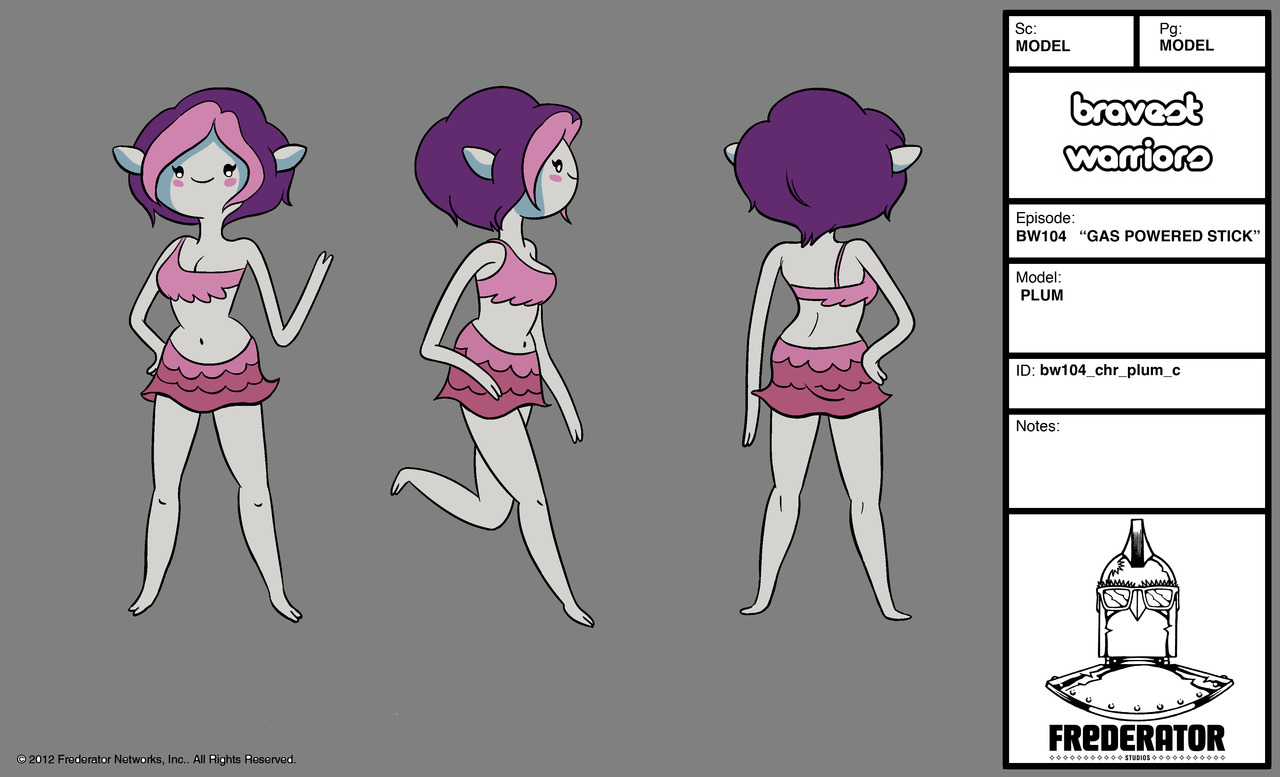
Plum concept art, model sheets etc source: bravestwarriors.wikia.com/wiki/File:Plum_Concept.png
Chris concept art, design, model sheets etc source: bravestwarriors.wikia.com/wiki/File:Chris_Concept_Art.jpg
Character design source: bravestwarriors.wikia.com/wiki/File:Bravest_Warriors_Bathing_Suits.jpg
Storyboard source: bravestwarriors.wikia.com/wiki/File:BW_-_It%27s_just_one_huge_dimension_garden.jpg
1 December 2014
Hercules by Andreas Deja
Source: Deja, A. (2014). Deja View: "I'm an Action Figure". [online] Andreasdeja.blogspot.ca. Available at: http://andreasdeja.blogspot.ca/2014/10/im-action-figure.html [Accessed 1 Dec. 2014].
"When I animated this scene with Hercules I was able to benefit from some live action reference.
The actor who went through the motion in front of a video camera was Robert Gant.-Andreas Deja
I received a layout package which included these two enlarged print-outs from the footage. Before animating I studied Robert’s acting and actions on a TV monitor. At the same time I drew a series of thumbnail sketches as I was searching for the key poses.
I remember the live action footage being excellent, and I used most of what Robert was doing. But by not tracing photostats it is still necessary to digest the scene in your head and make it your own.
Here are the rough key poses from the scene:"
30 November 2014
The Crane Wife (1998) retold by Odds Bodkin
Bodkin, O. and Spirin, G. (1998). The crane wife. San Diego: Harcourt Brace.
Staying true to the orginal Japanese telling, this version of the story employs very Japanese-inspired illustrations, which look like screen prints and painting of old from ancient Japan.
The scenes an figures are painted in a flattened, 2D style. The background landscapes of mountains employ little shading or depth, and so suggest perspective while still looking quite flat. It reminds me slightly of cartoonish-style that is used in many animations.
The colours used are rich tones of golds, ochres and rust. They look more autumnal than I would choose for my own piece. Other than the living subjects, the rest of the painting is loosely formed without heavy line work. Shapes blend easily in to one another and suggest their structure more than actually define it. The buildings and man-made structures contrast greatly with the surrounding nature by having definite straight edges and geometric shapes.
In this telling of the story, the man is called Osamu. He is a sail maker rather than a wood cutter.
Staying true to the orginal Japanese telling, this version of the story employs very Japanese-inspired illustrations, which look like screen prints and painting of old from ancient Japan.
The scenes an figures are painted in a flattened, 2D style. The background landscapes of mountains employ little shading or depth, and so suggest perspective while still looking quite flat. It reminds me slightly of cartoonish-style that is used in many animations.
The colours used are rich tones of golds, ochres and rust. They look more autumnal than I would choose for my own piece. Other than the living subjects, the rest of the painting is loosely formed without heavy line work. Shapes blend easily in to one another and suggest their structure more than actually define it. The buildings and man-made structures contrast greatly with the surrounding nature by having definite straight edges and geometric shapes.
In this telling of the story, the man is called Osamu. He is a sail maker rather than a wood cutter.
S
'Red leaves fell on the dark wood of his porch.' 'There lay a great crane, stunned and still.' 'Soon its black, shining eyes opened.' Because it is set in japan, the species of the crane in this book is different from the one I would be basing my crane on. It has black rather than golden eyes, and it all white like a swan, with no black or red.
'A beautiful young woman gazed up at him, her black eyes shining.' 'Osamu asked her many questions, but all the young woman would tell him was that her name was Yukiko.' 'You must promise never to look at me as I work, she said.' 'It takes all that I am to weave such sails.' 'These sails, they take so much from me, she pleaded. It is my very self they take.'
'Unable to contain himself, Osamu ran around the screen. A long beak swung toward him. Sad black eyes gleamed at him. There stood the crane he had saved in the storm!' 'The bird was weaving its white feathers into the sail on the loom.'
'The only answer his crane wife could give was a soft, strange sound, like a cat purring in bamboo reeds. Then Yukiko spread her wings, lifting herself through the window and into the sky.'
'Never again did Osamu see her.'
29 November 2014
Uninspired
I've been feeling really uninspired and un-motivated lately. For the past few weeks it has been hard to keep up regular practice and updates to my process book.
I've been going through a bit of a hard time in general, and have been to the doctor's and student support unit for different reasons. I have not been able to focus all of my attention on my work at hand, and when i try to think about animation my mind often wanders. I have been feeling a bit hopeless and the workload is scary and overbearing. I just get worried that there is no way i will be able to accomplish what I want, and I have this huge, looming fear of failure that overshadows all the work I do.
I want to get myself out of this rut and start working regularly again, because I'm feeling guilty and quite behind on schedule. I thought rather than sitting down at a desk and having the same block as before, I should instead have a day out, visiting galleries in the city and gathering inspiration. That way, I would have a lot to think about; ideas to work off, images and artwork to use as a basis for my own.
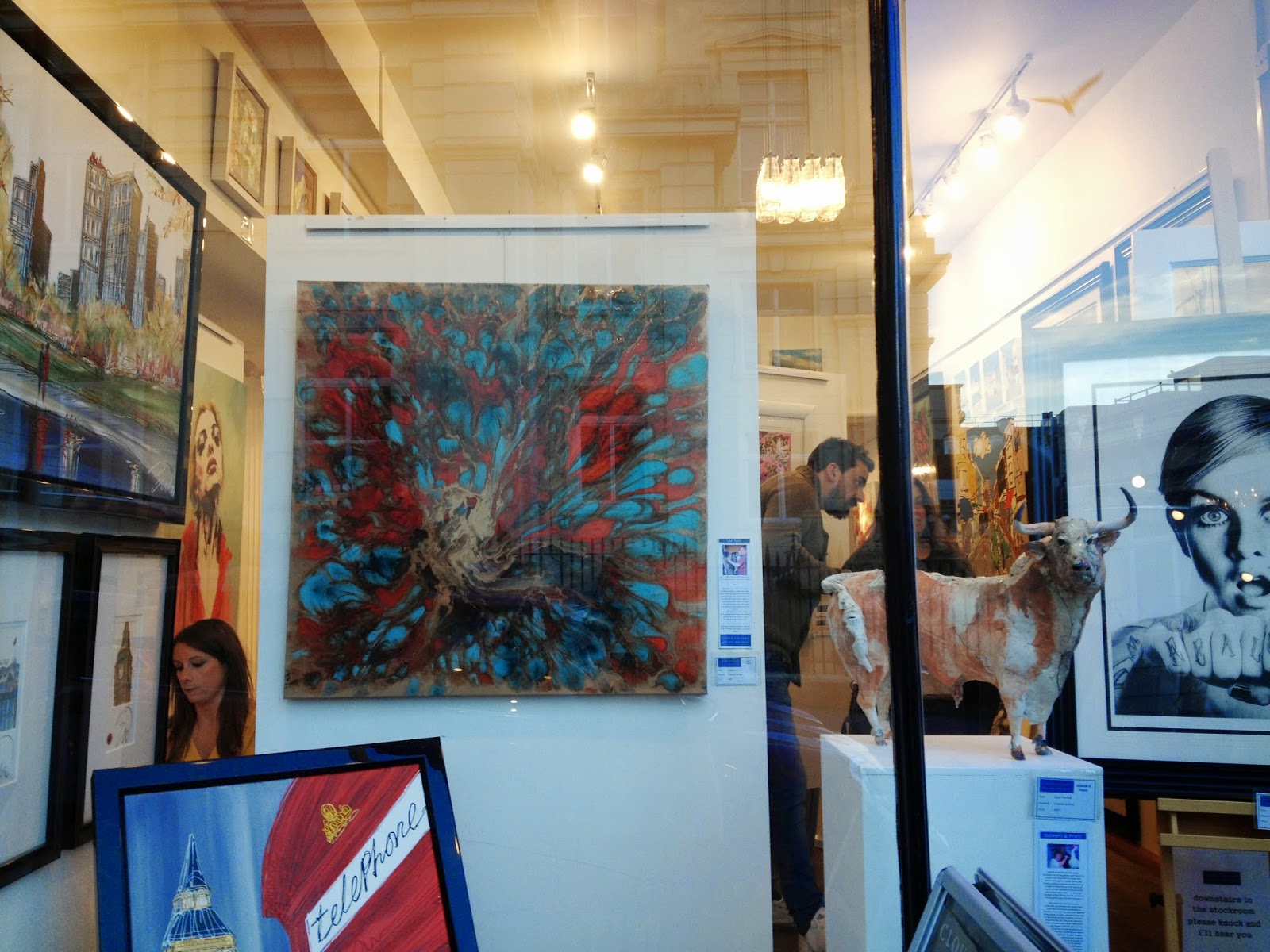
I spent the whole day walking around town, visiting any galleries and fairs I passed along the way, speaking to the curators and artists and taking as many photos as I could. I saw some other interesting stuff in passing as well, like interesting posters and books in shops, graffiti in the streets, and cards and leaflets I picked up on the way.
I've been going through a bit of a hard time in general, and have been to the doctor's and student support unit for different reasons. I have not been able to focus all of my attention on my work at hand, and when i try to think about animation my mind often wanders. I have been feeling a bit hopeless and the workload is scary and overbearing. I just get worried that there is no way i will be able to accomplish what I want, and I have this huge, looming fear of failure that overshadows all the work I do.
I want to get myself out of this rut and start working regularly again, because I'm feeling guilty and quite behind on schedule. I thought rather than sitting down at a desk and having the same block as before, I should instead have a day out, visiting galleries in the city and gathering inspiration. That way, I would have a lot to think about; ideas to work off, images and artwork to use as a basis for my own.
I spent the whole day walking around town, visiting any galleries and fairs I passed along the way, speaking to the curators and artists and taking as many photos as I could. I saw some other interesting stuff in passing as well, like interesting posters and books in shops, graffiti in the streets, and cards and leaflets I picked up on the way.
Subscribe to:
Posts (Atom)