Disney cartoons and the Japanese cartoon industry are 'two of the most prolific producers,' and 'two animated cartoon worlds which influenced audiences more than any other' (113). In this piece, the period between 1928-1942 at Disney is focussed on, whereas in Japan the 1960's boom in animation is explored. (This essay makes frequent references to childhood, as Raffaelli closely links it to the cartoons' ideal audience.)
Animation has an 'ability to adapt to all forms of language' (114) which is why I think it is the perfect medium with which to tell a japanese-located folk tale and re-locate it to another time period and geographic setting, the form symbolizes the tales ability to traverse space and culture.
Firstly Raffaelli looks at Disney's rise in popularity and its innovation int he animated world. He notes the form of characters drawn - 'an assemblage of rubber-like tubes: two for the legs, two for the arms and a bigger one for the trunk' (114). Rubber-hose characters 'draw upon the conventions of silent film comedy' (114) for their bodily communication. In black and white film of early Disney films, the characters had 'black skin' which 'fascinated the contrast with the lighter background' (114). The film in an hommage to childhood, where objects serve puposes other than their own. The adult 'is represented by the big, vulgar, and evil cat' who works but never plays, like adult responsibility.
Disney was one of the first to subscribe to the idea of making characters that audiences could 'identify' with, and so feel greater loyalty towards: which helped Disney to become unique amongst other animators and amass a following. In order to become even more successful, Disney wanted to break tradition and be innovative, by making more serious works, which eventually led to features such as Snow White. He did away with rubber-hose creatures, creating instead 'expressive and credible characters' (115). 'Disney sought to bring animation to its maturity, to widen its vocabulary, its expressive potential' (115). Though still acting within the playworld of animation, he was now credited and given attention along the lines of 'real' film makers.
Disneyan discourse seems to be both the 'inspiration and the consequence' of the American model (117). It allows the 'exaltation of the individual in the apotheosis of the community' (117). Anything is possible for anyone, as long as they are industrious and jump at our lucky strikes. 'In the feature films the wicked characters are killed' (118). For Disney, everything 'must be maifest, expressed, resolved: there is no room for the unexplored, the obscure' (119). There is no risk that the wicked will ever triumph; no room for subversion. The purpose is to create a sense of comfort and unity in the audience. In this case, itis easy to unite against 'evil.' Disney's films are meant to be viewed as a collective, in a cinema, so viewers 'stimulate one another' (120).
Disney himself maintained a paternal role within the workings of his studio. He rewarded hard work; was stingy with compliments, and acted as supervisor (118-119).
Next is the analysis of Japanese cartoons, distinctly seperate and contrasting to Disney. A prototype and classic of Japanese cartoons, Heidi of the Alps was made in 1974 and was one of the first to be broadcast in Europe. It contains elements that are typical of anime: an orphaned heroine and family-less characters (124). The creators based it on a Swiss novel, but removed any of the religious (christian) themes, 'to make the story comprehensible to audience in their own country' (126).
The first television animated series were based upon manga (comics) from Japan, and influenced by the artwork in these; such aesthetics from Goast Man & Onward to Victory became highly influential to the future of animation (126-127).
The animation industry was born 'the under the influence' of the American (127). Many studios could not imitate the aesthetics nor the success of Disney, so they had to diverge into their own route. This birthed the 'subjectivity' of the Japanese cartoon, which used character's thoughts or a narrator's comments as voice over.
To save money, instead of drawing movements, the drawings were moved (127), and each drawing could be help up to 5 or 6 frames. This gave a less fluid look than the American style. 'Thus, a character gazing at some terrible situation with a terrified look on hisface will have a drop of sweat fixed on his forehead and his mouth wide open for a long time' (127). 'The reason, obviously, is to save time and work' but it has a unique effect on the story. It looks almost like an 'animated comic-strip' (129). 'Japan cartoon uses a different language' of narrative.
Unlike Disney's aim of unifying viewers in cinema environments, the japanese animators went in another direction entirely. The industry became prominent at the same time more people were aquiring home tv-sets, and so they found a market in television shows instead of feature films, and in a solitary audience rather than a collective one (130). They appealed to 'lonely children' with working parents, and so often featured 'stories of orphans and robots' (130).
Unlike Disney, with its safety and comfort offered and presumption that goodness will always triumph, the anime ise a lot more violence, and show more ambiguity about the winners int he struggle of good vs. evil (133-134). Fear in anime is a real, and much relied on concept. Scenes of mass destruction and devestation are common (134).
Reference:
Raffaelli, L. (1997). Disney, Warner Bros. and Japanese Animation. In: J. Pilling, ed., A Reader in Animation Studies, 1st ed. Sydney: John Libbey, pp.112 - 136.

Showing posts with label Disney. Show all posts
Showing posts with label Disney. Show all posts
6 January 2015
Tangled Storyboards


5 January 2015
The Making of Beauty and the Beast
Unlike the 'Making of Sleeping Beauty' video, this one delves deeper into the issues concerting the adaptation of a fairy tale to become an animated feature film. It compares the original folk story and the adapted version. The story team working on the film changed the character of Belle by fleshing her out; making her more humble and quirky. They created new characters to expand the story further from the original. Comedy is added to a gloomy story, as well as commentary, in the form of the Beast's servants. the villain, Gaston was added to thicken the plot. He acts as a foil for Beast.
This video focuses a lot more on the character design and development rather than the concept art and background design.
This video focuses a lot more on the character design and development rather than the concept art and background design.
The Making of Sleeping Beauty
This video that I found on YouTube is amazing. The things I found most interesting to learn of were the medieval tapestries and Persian arts used as reference for the art style; and the amount of live action recording used as source material for the animation. each background took up to 10 days to paint by hand! I can't even imagine trying to do something of that depth for my own animation!
Walt Disney mentions being inspired by the classical music piece 'Sleeping Beauty', but doesn't actually talk in depth about the route of the folktale on which the story is based, and about his decision to adapt it in a certain way.
28 December 2014
Reading: Breaking in to the Movies - Giroux
(Unlike previous readings I have undertaken from the past few years- this one is from 1989 and as such is dated in its information and the absence of many texts.)
Giroux is highly crtical of Disney animated adaptations of tales as an institution. 'As one of the primary institutions constructing childhood culture, it warrants healthy suspicion and critical debate' (106). Disney shapes identities, through its prominent position in modern popular culture, and introduction to children at a young and impressionable age. It is imperative to analyse how Disney's films influence how children imagine their world. Giroux argues that to analyze the films with a critical eye, we as consumers can remain engaged and challenged. There is a tendancy for people and theorists to ignore Disney as mere entertainment. He contests that these 'do not exist in some ideologically free comfort zone' (111), and hence should be not be treated as such. In this chapter, Giroux idenitifies problematic elements of the famous Disney animated films, categorizing them as 'repetitive stereotypes that are characteristic of Disney's view of the childhood culture' (111) Disney production must be seen as a policy making enterprise, and as such held accountable for its short-fallings.
'Disney's themes function as part of a broader public discourse, privileging some definitions or interpretations over others.' (112) This attitude, especially one which is unquestioningly accepted by the public and fed to impressionable children, is of course problematic and needs challenging and discussing.
Representation of gender (particularly the female) in Disney films is one of the most controversial issues, both as identified by Giroux and also by feminist theorists in general. He lists many textual examples of events or characters which he feels to be questionable. Jack Zipes believes Disney films reproduce 'a type of gender stereotyping that has an adverse effect on children' (118). Its view of female agency is 'limited'.
Females in The Little Mermaid are 'subordinate to males' (114). I personally do take a bit of an issue with this 'definitive' reading of the matter, and would argue that based on a class reading, Ariel is the superior of Sebastian (a male character, even an elder of hers) and decides to ignore his instruction and authority often. Ursula, a female villain, is arguably (one of) the most powerful characters, and controls those around her including Eric, and her two male eel servants. Though I do understand where a general view of the the opression of women as a reading could come from.
All the rulers in the Lion King are male, females are subordinate, Giroux states. This reinforces 'Patriarchal entitlement' (117) and normalizes the presence of males in ruling positions.
A problematic aspect of Disney films, is that 'in both animal and human form, Disney portrays young girls as highly sexualized' (115). This comes from a patriarchal position of the male writer and the male gaze he bestows: of women as objects to be looked at with desire. Even Nala in The Lion King has fluttering, 'come-hither' eyes. It is of note that most of these women are indeed 'young,' and Disney makes use of their child-like naivety to construct a lolita-esque female figure. Older women are de-sexualised/ asexual in presentation, and rendered undesireable under the male gaze.
Also playing in to problematic representations of females and their agency, is the normalized occurence of a case of Stockholm Syndrome in Beauty and the Beast, where a woman is imprisoned by a male and learns to forgive and fall in love with him. Belle acts as a 'prop' to solve the Beast's dilemma. Beasts behaviour is 'horifically abusive.' In fact, looking at previous literary versions of this Beauty and the Beast tale, it becomes apparent that the treatment of Beeauty was originally a lot less sinister and cruel, and it was infact Disney that added this. See the following, from wikipedia, as one of the {original} versions, and note how it contains none of the violence towards and disregard to women that the Disney version holds:
In the instance of Pocahontas, the problematic elements of female objectification and racial stereotyping are combined, incredibly. Unlike other adolescent Disney heroines, Pocahontas is not adolescent, instead a shapely women. The interesting thing about this is that the original person on whom the character is based was 13 years old. Disney has purposefully tried to distance their charatcer from 13 year old original, perhaps because her extreme youth would be seem as distateful to even suggest at sexualizing. Though the film manages to still portray women suspectly, and she is 'drawn primarily in relation to the men that surround her' (116). As regards the priviledged, white western re-writing of this tale, it 'bleaches colonialism of its genocidal history' (117).
Racial stereotyping is another 'major issue' alongside mis-representation of women. There is a known 'legacy of racism' in Disney (119). This comes to play most visibly in the 'racist stereotyping in Aladdin.' It gives a depiction of Arab culture with a decidedly racist tone, through supporting characters who are portrayed as 'grotesque, violent, and cruel' (119). The grotesqueness comes in the form of hulking figures, hook noses and squinting eyes. Lyrics of songs sung by supporting characters contain words like 'barbaric'. Mispronunciation of names and racial coding of accents, which occur many times in Disney films, shows not necessairly negativity but instead ignorance.
In the Lion King, Scar (the villain) is depicted as darker than the other lions. The hyenas take on the discourse of a decidedly 'urban, black and Hispanic youth' (121) and employ people of colour for the voice acting.
'Whiteness is universalized thriough the privileged representation of middle-class social relations, values, and linguistic practices' (121).
Reference:
Giroux, H. (2002). Breaking In to the Movies. Malden, MA: Blackwell Publishers, pp.100 - 122.
Giroux is highly crtical of Disney animated adaptations of tales as an institution. 'As one of the primary institutions constructing childhood culture, it warrants healthy suspicion and critical debate' (106). Disney shapes identities, through its prominent position in modern popular culture, and introduction to children at a young and impressionable age. It is imperative to analyse how Disney's films influence how children imagine their world. Giroux argues that to analyze the films with a critical eye, we as consumers can remain engaged and challenged. There is a tendancy for people and theorists to ignore Disney as mere entertainment. He contests that these 'do not exist in some ideologically free comfort zone' (111), and hence should be not be treated as such. In this chapter, Giroux idenitifies problematic elements of the famous Disney animated films, categorizing them as 'repetitive stereotypes that are characteristic of Disney's view of the childhood culture' (111) Disney production must be seen as a policy making enterprise, and as such held accountable for its short-fallings.
'Disney's themes function as part of a broader public discourse, privileging some definitions or interpretations over others.' (112) This attitude, especially one which is unquestioningly accepted by the public and fed to impressionable children, is of course problematic and needs challenging and discussing.
Representation of gender (particularly the female) in Disney films is one of the most controversial issues, both as identified by Giroux and also by feminist theorists in general. He lists many textual examples of events or characters which he feels to be questionable. Jack Zipes believes Disney films reproduce 'a type of gender stereotyping that has an adverse effect on children' (118). Its view of female agency is 'limited'.
Females in The Little Mermaid are 'subordinate to males' (114). I personally do take a bit of an issue with this 'definitive' reading of the matter, and would argue that based on a class reading, Ariel is the superior of Sebastian (a male character, even an elder of hers) and decides to ignore his instruction and authority often. Ursula, a female villain, is arguably (one of) the most powerful characters, and controls those around her including Eric, and her two male eel servants. Though I do understand where a general view of the the opression of women as a reading could come from.
All the rulers in the Lion King are male, females are subordinate, Giroux states. This reinforces 'Patriarchal entitlement' (117) and normalizes the presence of males in ruling positions.
A problematic aspect of Disney films, is that 'in both animal and human form, Disney portrays young girls as highly sexualized' (115). This comes from a patriarchal position of the male writer and the male gaze he bestows: of women as objects to be looked at with desire. Even Nala in The Lion King has fluttering, 'come-hither' eyes. It is of note that most of these women are indeed 'young,' and Disney makes use of their child-like naivety to construct a lolita-esque female figure. Older women are de-sexualised/ asexual in presentation, and rendered undesireable under the male gaze.
Also playing in to problematic representations of females and their agency, is the normalized occurence of a case of Stockholm Syndrome in Beauty and the Beast, where a woman is imprisoned by a male and learns to forgive and fall in love with him. Belle acts as a 'prop' to solve the Beast's dilemma. Beasts behaviour is 'horifically abusive.' In fact, looking at previous literary versions of this Beauty and the Beast tale, it becomes apparent that the treatment of Beeauty was originally a lot less sinister and cruel, and it was infact Disney that added this. See the following, from wikipedia, as one of the {original} versions, and note how it contains none of the violence towards and disregard to women that the Disney version holds:
'The Beast receives her graciously and informs her that she is now mistress of the castle, and he is her servant. He gives her lavish clothing and food and carries on lengthy conversations with her. Every night, the Beast asks Belle to marry him, only to be refused each time. After each refusal, Belle dreams of a handsome prince who pleads with her to answer why she keeps refusing him, to which she replies that she cannot marry the Beast because she loves him only as a friend.'
For several months, Belle lives a life of luxury at the Beast's palace, having every whim catered to by servants, with no end of riches to amuse her and an endless supply of exquisite finery to wear. Eventually she becomes homesick and begs the Beast to allow her to go see her family. He allows it on the condition that she return exactly a week later.Though one positive of the Disney film's narrative on gender is that it 'can be read as a rejection of hypermasculinity and a struggle between macho sensibilities of Gaston and the reformed sexist, the beast' (116)
In the instance of Pocahontas, the problematic elements of female objectification and racial stereotyping are combined, incredibly. Unlike other adolescent Disney heroines, Pocahontas is not adolescent, instead a shapely women. The interesting thing about this is that the original person on whom the character is based was 13 years old. Disney has purposefully tried to distance their charatcer from 13 year old original, perhaps because her extreme youth would be seem as distateful to even suggest at sexualizing. Though the film manages to still portray women suspectly, and she is 'drawn primarily in relation to the men that surround her' (116). As regards the priviledged, white western re-writing of this tale, it 'bleaches colonialism of its genocidal history' (117).
In late 1609, an injury from a gunpowder explosion forced Smith to return to England for medical care. Historical records do not suggest that Smith and Pocahontas were lovers, or even that she was a suitable age for such a relationship. The first romance was written about them in the early 19th century, suggesting the story's mythic appeal.In Mulan, the heroine 'challenges traditional stereotypes of young women' (117). One can see this as a feminine-positive reading at first, though intrinsically it still conforms to the same old devides, and 'ultimate payoff of [Mulan's] own bravery comes in the form of catching the handsome son of a general' (117). By becoming a soldier - disguising herself as a man - she becomes one of the boys; 'rather than defining herself against the patriarchal celebration of war' (118). Mulan is an 'exoticized version' of an American girl, writes Giroux; holding true to patriotic, war-mongering ideals.
Racial stereotyping is another 'major issue' alongside mis-representation of women. There is a known 'legacy of racism' in Disney (119). This comes to play most visibly in the 'racist stereotyping in Aladdin.' It gives a depiction of Arab culture with a decidedly racist tone, through supporting characters who are portrayed as 'grotesque, violent, and cruel' (119). The grotesqueness comes in the form of hulking figures, hook noses and squinting eyes. Lyrics of songs sung by supporting characters contain words like 'barbaric'. Mispronunciation of names and racial coding of accents, which occur many times in Disney films, shows not necessairly negativity but instead ignorance.
In the Lion King, Scar (the villain) is depicted as darker than the other lions. The hyenas take on the discourse of a decidedly 'urban, black and Hispanic youth' (121) and employ people of colour for the voice acting.
'Whiteness is universalized thriough the privileged representation of middle-class social relations, values, and linguistic practices' (121).
Reference:
Giroux, H. (2002). Breaking In to the Movies. Malden, MA: Blackwell Publishers, pp.100 - 122.
27 December 2014
Unnoted Reading (??)
These notes I have transcribed and saved in a document on my computer, but I am not sure exactly from where I sourced them, so here they are below, unreferenced, until such time as I can determine where I originally read them from! Apologies!
'It is a mistake to assume that Disney's ideology represents a radical departure from the american norm. Its appeal is based on careful attention to centrist values' (238)
'The bodies presented are beautifully crafted fictions. Disney's narratives are, like all, ideological constructs and so too are its bodies.' (238)
'representing a configured idealized male body. the bodies of people of color and women, and therefore the narratives surrounding them, are largely absent' (238)
'Disney, as the master trickster on the scene, has taken control of bodies, mutated and mutilated them without mercy in the service of his narrative' (238)
'Walt Disney World does not just suppress people of color and women, as does the larger world; it has the tendency to suppress anything problematic, no matter how central to European American history. This suppression is part of its pleasure contract.' (238)
'Ordinarily, Disney grossly distorts culture differences, homogenizing them into a happy multi-cultural mix from which every alien element emerges Mickey-clean and ready for shopping mall consumption. It has at its disposal a vast array of techniques that neatly reinscribe difference, writing over bland diversity' (242)
'the male gaze dominates at Disney' (244) 'homosexuality is diffused' (244)
'Although Mickey's sexuality is normally repressed, one of Mickey's costumes in the late 40's and 50's was also reminiscent of the pachuco costume' (247)
'ambiguously coded bodies' (248)
'Disney has meticulously tailored its product to appeal to those who accept a normalized American version of culture' (248)
'representation is a pre-historic activity and pleasure. the pleasure of representation seems to stitch together the somatic and the intellectual. as our technologies for representation evolve, the complexities of the issues concerning them seem to evolve' (249)
one subtext of this essay is the violence of exclusion - "when the pirates of the Caribbean breaks down the pirates don't eat the guests"
for Disney, commodification rules
Reading: Somatexts at the Disney Shop by Elizabeth Bell
As I mentioned in the previous post when discussing Jack Zipes' investigation of the early success of Walt Disney; in the early days of animation it was a male dominated field, which was evidenced by the patriarchal ideology pushed within productions by the male animators with their 'phallic' pens and pencils. Bell in this chapter reiterates this point. She notes that in around the 1930's, Disney 'strictly divided labor into that performed by men and that relegated to women' (107), (emphasis added by myself). 'The production staff was overwhelmingly male except for 200 women in the Painting and Inking department' (107). She uses this as her introduction to a chapter about the politics of women's animated bodies; emphasizing the obvious correlation between the gender bias of the industry and the bias of the final product. 'With the name "Walt Disney Pictures," Disney wrote his name and ownership on the folk stories of women' (108). This is true both of tales written/ told originally by women, and tales in which women play protagonists. Disney is proudly stating that he has authored a portrayal of female characters from his male viewpoint, which is problematic to say the least.
Some may argue against contemporary criticism of Disney by saying it was of its time, or it was unconscious of its faults in gender representation or cultural appropriation. However, Bell argues that Disney's animation is not innocent; 'nothing accidental or serendipitous occurs in animation as each second of action on screen us rendered in twenty-four different still paintings' (108). With so much scrutiny over aesthetics and form, nothing is encoded into the text by chance.
In this chapter, Bell divides representations of animated women into three sections, determined by the subject's stage of life. The age, and aging of women is a contentious issue, especially in male-constructed texts and discourse. 'The exacting, communally created images of women by men are consistently rendered in a somatic triumvirate of bodily forms and snapshots of the aging process. The teenaged heroine at the idealized height of puberty's graceful promenade;' 'female wickedness - embodied;' 'is rendered as middle-aged beauty at its peak of sexuality and authority' while finally 'nurturing is drawn in pear-shaped, old women past menopause [...] as the good fairies, godmothers, and servants' (108). We delve into inspection of how females in each of these sections are visually coded, betraying the intentions of representation by the animators: 'this essay explores the "semiotic layering" in the construction of women's bodies in Disney animation' (109).
The female characters in the folktale templates by the likes of the Grimms and Andersen are like 'painted ciphers' with no weight. However, with 'cinematic conventions of representing women, the levels become increasingly coded and complex. Disney's drawn women are transformed from weightless ciphers, drawn in black and white by men, into a second definition of cipher, texts encoded to conceal their meaning' (109) Ciphers of folktale heroines and female villains are transformed into 'conflicting codes of race, class and gendered performance' (110).
Firstly, Bell discusses the protagonists of many Disney fairy tale revivals - the heroines. Typically, 'Disney artists sketched the flesh and blood on these folktale templates with contemporaneous popular images of feminine beauty and youth, their sources ranging from the silent screen to glossy pin-ups' (109). The heroines are depicted as young, in their prime. These 'constructed bodies of young women' (110) have been produced under the male gaze. Animated heroines were 'both conforming to and perfecting Hollywood's beauty boundaries' (110). For source material, the animators looked at professional dancers' movements: 'their bodies built on the disciplined, expressive "naturalness" of dancers, have backbone' (112). This contrasts interestingly with the depiction, through their actions and discourse, that the heroines are usually seen as distressed damsels: spineless and unable to take care of themselves. 'While the characterizations of Disney heroines adhere to the fairy-tale templates of passivity and victimage, their bodies are portraits of strength, discipline, and control' (112). The juxtaposition of their aesthetic and their actions creates an interesting dynamic. 'The "backbone" of dance argues with the weakness of the narratized girls' (115).
These idealized young women have always been depicted in the male-dominated animation industry, in fact it wasn't until Beauty and the Beast that Disney had their 'first tale/film screenplay written by a woman' (114) The idea that women can produce more complex and nuanced female characters is a relatively contemporary notion. However, there is still a way to go in creating a positive, progressive medium for women creators and subjects in animation. Many of the tired tropes, such as the young, delicate heroine still exist, as is the rationale that they must find or marry a man to save them, and ultimately define them as characters. 'the tales still narrate and fulfill their destiny as marriage/reward for the prince/beast; their commodification in the marriage plot' (114). The heroines are desirable creatures, worthy of being rescued/saved and 'won.'
'The young heroines are typical of "the perfect girl" whose body, voice, and destiny are a "mesmerizing presence" through which "girls [enter] the world of the local hero legend, and experience the imposition of a framework which seemingly comes out of nowhere - a worldview superimposed on girls but grounded in the psychology of men"' (121).
Heavily contrasting to the meek, vulnerable heroine is the evil female villain of fairy tales. 'Disney transforms the vain, active and wicked women of folktales into the femme fatale' (115). The images are reminiscent of film noir actresses. 'The readability of the femme fatale, painted in beautiful and shapely strokes' on the bodies of Disney's antagonistic females, 'is evident in the careful cosmetic of paint, cowls, jewelry, and "clinging back dresses"' (115). Snow White's Wicked Queen's beauty is 'sinister, mature, plenty of curves' (116).
These women have 'power and authority as femmes fatales, living and thinking only for themselves as sexual subjects, not sexual objects' (116). By depicting evil women in a sexualized, wanton light, the animators manage to 'subvert their authority even while fetishizing it - these deadly women are also doomed women' (116). Unlike the innocent, 'good' coding of the sexually mature heroines, these slightly older women are vilified for taking control of their sexuality, and being seen to 'flaunt' it, which is not approved of in the patriarchal society. Therefore, they must be punished. 'Their excess of sexuality and agency is drawn as evil' (117). In contrast to the younger heroines, 'congruous cinematic codes inscribe middle age as a time of treachery, consumption, and danger in the feminine life cycle' (116). The wicked women harbor depths of power that are ultimately unknowable but bespeak a cultural trepidation for unchecked femininity' (121). Interesting to note, it is these villainous women who are the only characters to address the audience/ camera/ screen directly out of all the women.
Animators designed these body types as symbolic of predatory animals. 'The construction of their bodies on predatory animals heightens the dangerous consumptive powers of the femme fatale' (117). For example, Maleficent was designed like a giant vampire bat. 'Disney's famous decree for Snow White's Wicked Queen, that she be a "mixture of Lady Macbeth and the big bad wolf"' (117). Ursula has 'consumptive, deadly' octopus tentacles (117). All the above emphasize unsubtley 'the potency of women's evil and their dangerous and carnivorous threats to order' (117). The last point made by Bell I find to be the most interesting, and perhaps, 'telling' one. Disney of course, comes from a time when American capitalism was coming into its own - when small media houses and studios were spreading into large national corporations and conglomerates. It was a time of the market and when the ultimate success was seen as being a productive, financially useful part of society. Men worked; produced goods and services and brought home money. Women provided for their families by raising children and completing all the menial household tasks. That was a woman's ultimate contribution to society, to be a good mother and wife. In this way,, Disney manages to vilify the antagonists in an even more insidious way. ball states ''it is appropriate that the femme fatale is represented as the antithesis of the maternal - sterile or barren, she produces nothing in a society which fetishizes production' (119). She was undesireable in Disney's ideal world.
Finally we come to the final depiction of women - that of the last stage of the life cycle. Women past middle-age such and grandmothers are presented as maternal, caring, overseeing influences in the lives of the young heroines, and play a maternal role. The Disney animators used 'depictions of feminine nurturing and sacrifice in their depictions of good fairies, godmothers and servants' (118). These women were never the centre of attention, and never took away from the desirability of the heroines, they played a background role and a foil for the actions of the other women: 'never needful in their own rights' (118), which in Disney's world of female subservience was idealized. 'On the blank sketchpads of Disney artists, feminine nurturing and sacrifice are consistently drawn in contrast to the femme fatale. Unlike the shapely and mature curves of wickedness, Disney grandmothers are pear-shaped or apple-shaped' (118). Their animated bodies are drawn in direct contrast to the sexualized evil middle-aged women, any plumpness is confined to their stomachs and arms rather than hips and breasts. Visually, they are plain and undistinguished both beside the heroines and the villains, 'with none of the painted vanities of evil, they wear no cosmetics, jewelry, or adornment; indeed they have no lips. their hair, gray, silver or white, is covered. (118). Even the clothes that they are drawn in tend to be frumpy and conservative, more demure than the villains and markedly older than the heroines. These older women can be such good caretakers because they have nothing else left to give in life; they are no longer fertile and so useless for marriage or even desire of any kind. Their 'postmenopausal script of asexuality' (119) frees them up to give their undivided attention to others (heroines), rather than engaging in courting. The representation of frumpy, older bodies 'are nonthreatening, unavailable and harmless.' (119)
Reference: Bell, E. (1995). Somatexts at the Disney Shop. In: E. Bell, L. Haas and L. Sells, ed., From Mouse To Mermaid, 1st ed. Bloomington: Indiana University Press, pp.107-124.
Some may argue against contemporary criticism of Disney by saying it was of its time, or it was unconscious of its faults in gender representation or cultural appropriation. However, Bell argues that Disney's animation is not innocent; 'nothing accidental or serendipitous occurs in animation as each second of action on screen us rendered in twenty-four different still paintings' (108). With so much scrutiny over aesthetics and form, nothing is encoded into the text by chance.
In this chapter, Bell divides representations of animated women into three sections, determined by the subject's stage of life. The age, and aging of women is a contentious issue, especially in male-constructed texts and discourse. 'The exacting, communally created images of women by men are consistently rendered in a somatic triumvirate of bodily forms and snapshots of the aging process. The teenaged heroine at the idealized height of puberty's graceful promenade;' 'female wickedness - embodied;' 'is rendered as middle-aged beauty at its peak of sexuality and authority' while finally 'nurturing is drawn in pear-shaped, old women past menopause [...] as the good fairies, godmothers, and servants' (108). We delve into inspection of how females in each of these sections are visually coded, betraying the intentions of representation by the animators: 'this essay explores the "semiotic layering" in the construction of women's bodies in Disney animation' (109).
The female characters in the folktale templates by the likes of the Grimms and Andersen are like 'painted ciphers' with no weight. However, with 'cinematic conventions of representing women, the levels become increasingly coded and complex. Disney's drawn women are transformed from weightless ciphers, drawn in black and white by men, into a second definition of cipher, texts encoded to conceal their meaning' (109) Ciphers of folktale heroines and female villains are transformed into 'conflicting codes of race, class and gendered performance' (110).
Firstly, Bell discusses the protagonists of many Disney fairy tale revivals - the heroines. Typically, 'Disney artists sketched the flesh and blood on these folktale templates with contemporaneous popular images of feminine beauty and youth, their sources ranging from the silent screen to glossy pin-ups' (109). The heroines are depicted as young, in their prime. These 'constructed bodies of young women' (110) have been produced under the male gaze. Animated heroines were 'both conforming to and perfecting Hollywood's beauty boundaries' (110). For source material, the animators looked at professional dancers' movements: 'their bodies built on the disciplined, expressive "naturalness" of dancers, have backbone' (112). This contrasts interestingly with the depiction, through their actions and discourse, that the heroines are usually seen as distressed damsels: spineless and unable to take care of themselves. 'While the characterizations of Disney heroines adhere to the fairy-tale templates of passivity and victimage, their bodies are portraits of strength, discipline, and control' (112). The juxtaposition of their aesthetic and their actions creates an interesting dynamic. 'The "backbone" of dance argues with the weakness of the narratized girls' (115).
These idealized young women have always been depicted in the male-dominated animation industry, in fact it wasn't until Beauty and the Beast that Disney had their 'first tale/film screenplay written by a woman' (114) The idea that women can produce more complex and nuanced female characters is a relatively contemporary notion. However, there is still a way to go in creating a positive, progressive medium for women creators and subjects in animation. Many of the tired tropes, such as the young, delicate heroine still exist, as is the rationale that they must find or marry a man to save them, and ultimately define them as characters. 'the tales still narrate and fulfill their destiny as marriage/reward for the prince/beast; their commodification in the marriage plot' (114). The heroines are desirable creatures, worthy of being rescued/saved and 'won.'
'The young heroines are typical of "the perfect girl" whose body, voice, and destiny are a "mesmerizing presence" through which "girls [enter] the world of the local hero legend, and experience the imposition of a framework which seemingly comes out of nowhere - a worldview superimposed on girls but grounded in the psychology of men"' (121).
 |
| Ariel in The Little Mermaid source: http://princess.disney.com/ariel |
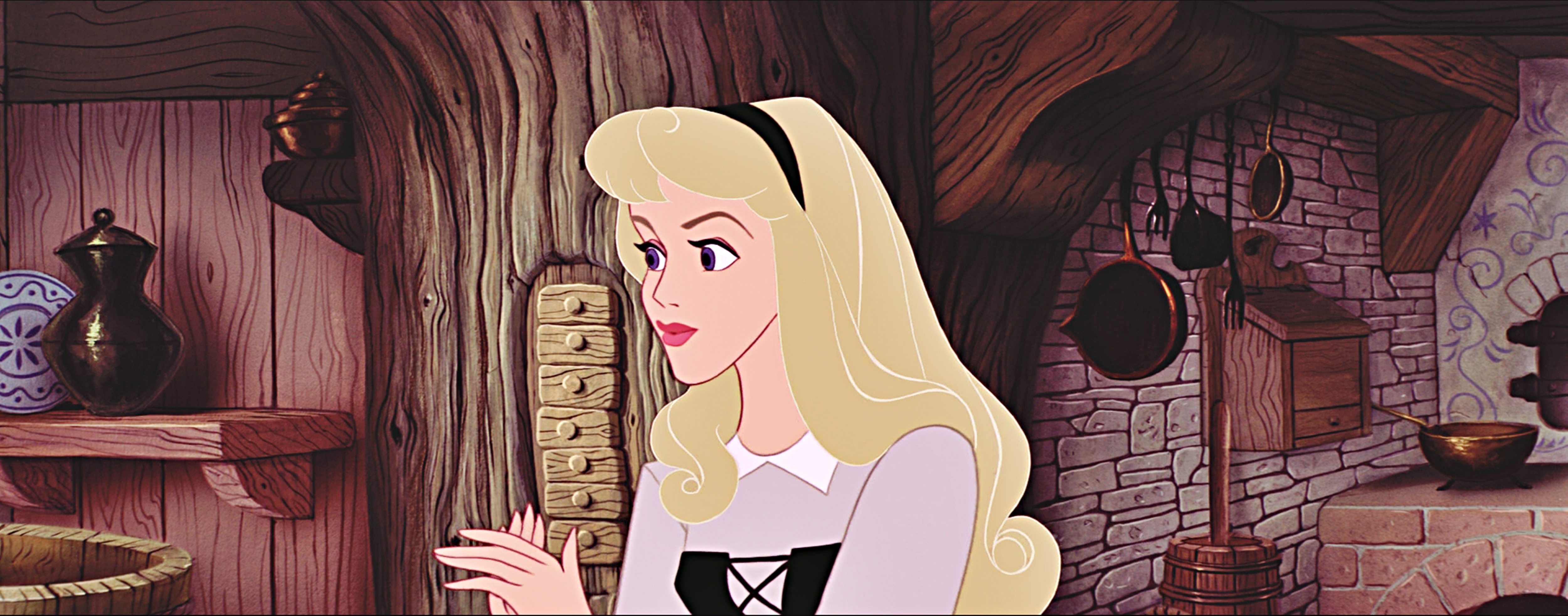 |
| Aurora from Sleeping Beauty source: http://m.niusnews.com/upload/imgs/default/intern/bo0430/Walt.jpg |
These women have 'power and authority as femmes fatales, living and thinking only for themselves as sexual subjects, not sexual objects' (116). By depicting evil women in a sexualized, wanton light, the animators manage to 'subvert their authority even while fetishizing it - these deadly women are also doomed women' (116). Unlike the innocent, 'good' coding of the sexually mature heroines, these slightly older women are vilified for taking control of their sexuality, and being seen to 'flaunt' it, which is not approved of in the patriarchal society. Therefore, they must be punished. 'Their excess of sexuality and agency is drawn as evil' (117). In contrast to the younger heroines, 'congruous cinematic codes inscribe middle age as a time of treachery, consumption, and danger in the feminine life cycle' (116). The wicked women harbor depths of power that are ultimately unknowable but bespeak a cultural trepidation for unchecked femininity' (121). Interesting to note, it is these villainous women who are the only characters to address the audience/ camera/ screen directly out of all the women.
Animators designed these body types as symbolic of predatory animals. 'The construction of their bodies on predatory animals heightens the dangerous consumptive powers of the femme fatale' (117). For example, Maleficent was designed like a giant vampire bat. 'Disney's famous decree for Snow White's Wicked Queen, that she be a "mixture of Lady Macbeth and the big bad wolf"' (117). Ursula has 'consumptive, deadly' octopus tentacles (117). All the above emphasize unsubtley 'the potency of women's evil and their dangerous and carnivorous threats to order' (117). The last point made by Bell I find to be the most interesting, and perhaps, 'telling' one. Disney of course, comes from a time when American capitalism was coming into its own - when small media houses and studios were spreading into large national corporations and conglomerates. It was a time of the market and when the ultimate success was seen as being a productive, financially useful part of society. Men worked; produced goods and services and brought home money. Women provided for their families by raising children and completing all the menial household tasks. That was a woman's ultimate contribution to society, to be a good mother and wife. In this way,, Disney manages to vilify the antagonists in an even more insidious way. ball states ''it is appropriate that the femme fatale is represented as the antithesis of the maternal - sterile or barren, she produces nothing in a society which fetishizes production' (119). She was undesireable in Disney's ideal world.
 |
| Ursula from The Little Mermaid source: http://seriable.com/upon-time-season-4-alias-star-play-ursula/ |
 |
| Maleficent from Sleeping Beauty source: http://linksservice.com/disney-sleeping-beauty-maleficent/ |
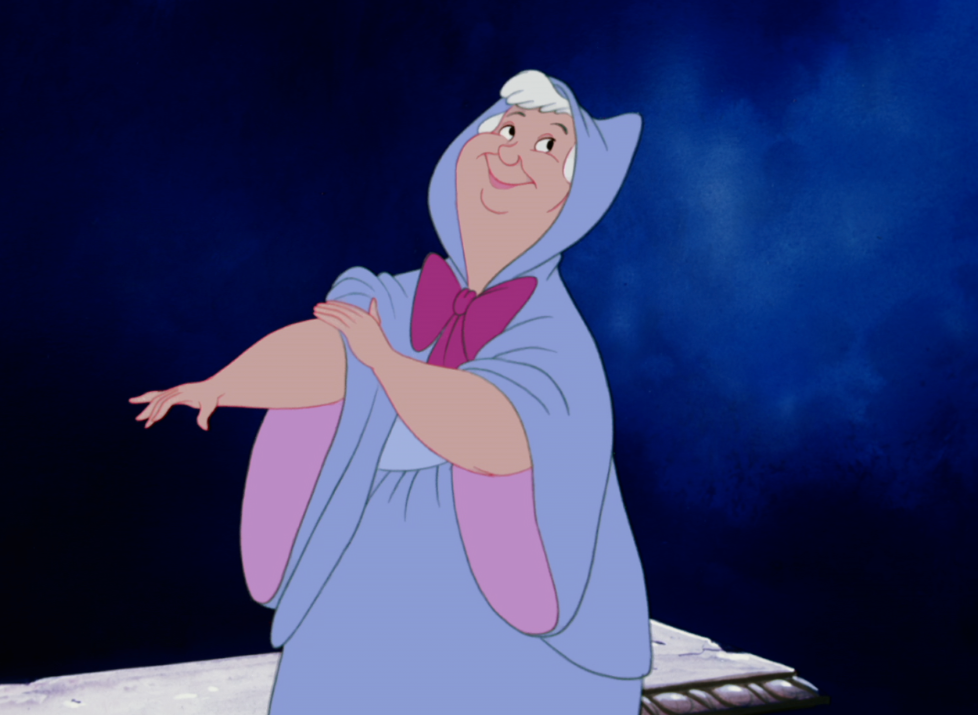 |
| Fairy Godmother from Cinderella source: http://disney.wikia.com/wiki/File:Fairy-Godmother.png |
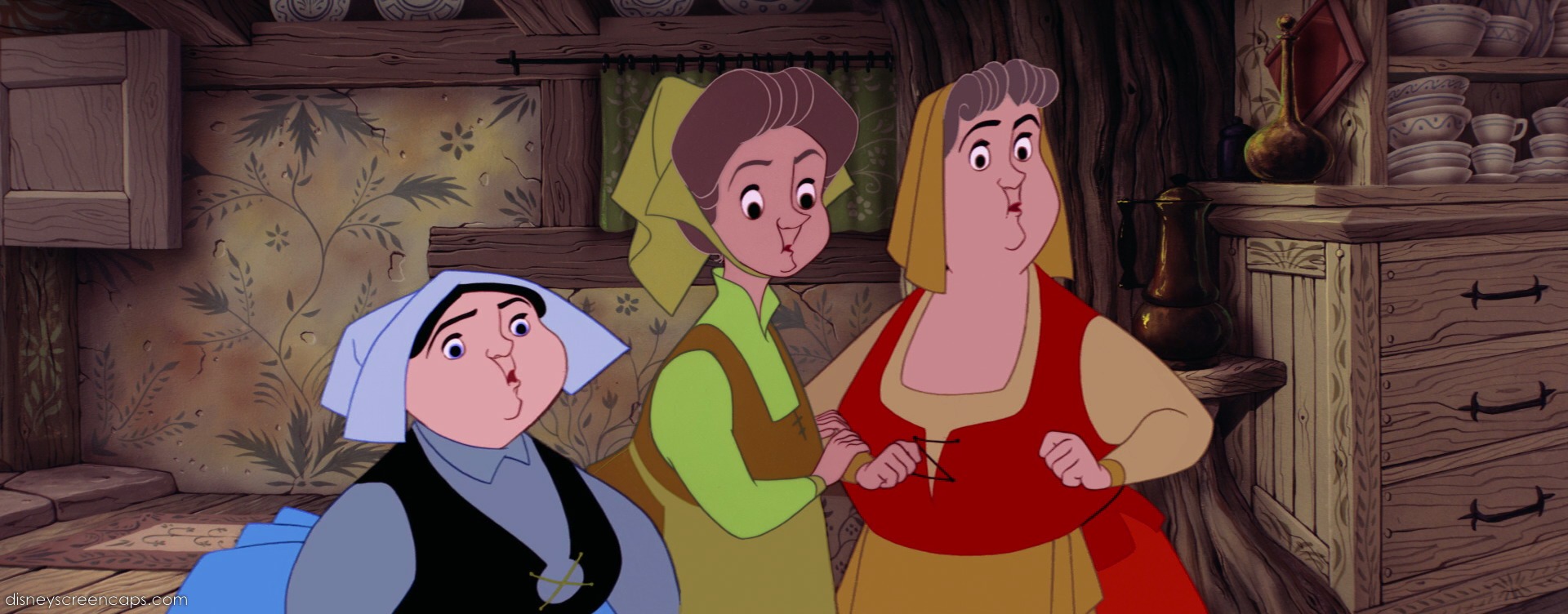 |
| The fairies in Sleeping Beauty source: http://disney.wikia.com/wiki/Flora,_Fauna_and_Merryweather |
26 December 2014
Reading: Breaking the Disney Spell by Jack Zipes
'Instead of using technology to enhance the communal aspects of narrative and bring about major changes in viewing stories to stir and animate viewers, he employed animators and technology to stop thinking about change, and to long nostalgically for neatly ordered patriarchal realms' (Zipes, 1995, pp. 40)Zipes, in his article on the historical institutionalization of folk tales/ fairy tales, is scathingly critical of Walt Disney and the commandeering of the genre by his animation studio. Zipes gives a brief summation of the evolution of the fairy tale from its oral origins up until the (relatively) present day where Disney had become the definitive marker for animated films of the fairy tale genre. In reading this chapter, I educated myself about the politics and cultural implications of adapting fairy tales using different mediums, with historical examples to draw these from.
Fairy tales originally were spoken word, told by story tellers within a community. They were 'based on rituals' localized to the community to which they belonged and were told with the intention of 'endow[ing] with meaning the lives of the members of a tribe' (22). These tales could be traced relatively easily to their origin points.The teller would imprint their own personal world view, which with representative of their community, into these tales. 'The voice of the narrator was known. the tales came directly from common experiences or beliefs. They were altered as beliefs and behaviors of the members of a particular group changed' (22). This shows that fairy tales and folk stories would vary widely between social groups, in form and contents, depending on their situation and common objectives. 'Oral tales had themes and characters that were readily recognizable and reflected common wish-fulfillment' (24). because they were usually based on poorer people and classes, it is understandable that they would idealize wish fulfillment to raise them in status, wealth or situation.
With the invention of printing and the widespread rise in European literacy in the fifteenth century, fairy tales began to be transcribed and distributed through print. This was the first step in the institutionalization of the fairy tale. France seemed to be the centre of this evolution, and by 'the end of the seventeenth and beginning of the eighteenth century' (23) the fairy tale was institutionalized as a literary genre. 'In the case of folk tales, they were gradually categorized as legends, myths, fables, comical anecdotes, and, of course, fairy tales (zaubermarchen) (22). A reason why there was such a boom in the production of fairy tale literature was because of the desire to preserve and instill a sense of national heritage in the population, as Zipes says that 'nation-states were cultivating particular types of literature as commensurate expressions of national cultures' (23). For example, 'The Brothers Grimm set about to celebrate German culture through their country's folk tales' (23)
While before fairy tales had been part of the broader folk genre of marchen, now they were being appropriated by the upper classes. 'Extremely few people could read, and the fairy tale in form and content furthered notions of elitism and separation,' because 'printing of a fairy tale was based on separation of social classes' (24). The target audience changed from small folk communities and common people to the educated bourgeoisie. Unfortunately, while the fairy tales grew in popularity, they were violated. 'The literary tales tended to exclude the majority of people who could not read, while the folk tales were open to everyone' (24). The people who originally created and retold the stories were now being excluded from the re-tellings, and the genre had been hijacked. These new tales 'featured narrative voice of the educated author and publisher over communal voices and set new guidelines for freedom of speech and expression' (30).
'Unlike the oral tradition, the literary tale was written down to be read in private.' No longer would the tales be a public performance, for collective consumption. The element of group participation was taken out of the dissemination of fairy tales. 'This privatization violated the communal aspect of the folk tale' (24).
However, thankfully, 'the oral tradition did not disappear, nor was it subsumed by the new literary genre' (23). The oral tales fed writers with material, while also the story tellers and folk communities fed off literature: 'in some cases the literary tales presented new material that was transformed through oral tradition and returned later to literature by a writer who remembered hearing a particular story' (23). The tales throughout the years have been re-mediated in cyclical motions.
In fairy tales there were 'subversive features in language and theme. This one one of the reasons that fairy tales were not particularly approved for children. in most European countries. It was not until the end of the eighteenth and early part of the nineteenth century that fairy tales were published for children' (25). This surprised me greatly to learn, because the impression that is mainly given in modern times is that fairy tales are infantile: created to entertain children and impress upon them moral lessons and ideals. I did not know that originally the literary tales, which have transformed into the best known fairy tales of modern day, were specifically not for children. However, 'the fairy tales for children were sanitized and expurgated versions of the fairy tales for adults, or they were new moralistic tales that were aimed at the domestication of the imagination' 'improper thoughts and ideas would not be stimulated' (25) and only developed after the adult versions, without such moral grounding, had gained popularity. The children's fairy tales which were created/adapted were supposed to soothe them, ass seen by their constant construction 'with the closure of the happy end' (26). 'Although the plots varied and the themes and characters were altered, the classical fairy tale for children and adults reinforced the patriarchal symbolic order based on rigid notions of sexuality and gender.' Because it comes from a patriarchal society, this was an important point to reinforce, especially in just-maturing children. The fairy tales, like the previously told oral tales, 'also served to encourage notions of rags to riches, pulling yourself up by your bootstraps, dreaming, miracles etc' (26).
After moving to the medium of print, 'the next great revolution in the institutionalization of the genre was the film, for the images now imposed themselves on the text and formed their own text' (27). This is where Zipes starts to discuss the influence of Walt Disney on the genre. He was one of the first animators to take the fairy tale and re-imagine it in animated form. This way he could take already written, royalty free stories and use them to show off his animation technologies and prowess. Disney is part of a trend in early animation, as we can see that 'almost all early animators were men, and their pens and camera work assume a distinctive phallic function in early animation'(29). This again reinforces the patriarchal viewpoint or ideals portrayed in the telling of fairy tales. Considering this, one could argue that perhaps just the act of a woman animating a fairy tale story could be subversive in itself?
Transformation of fairy tales from an oral to a written form had many implications for their readings, and similarly 'the revolutionary technological nature of film could bring a politicization of aesthetics' (30) because for the first time the audience was given the images directly of the characters and locations, chosen careful and edited by the animator. In this case, rather than the narrative being controlled by the author or publisher, now the 'narrative voice [could] only speak through the designs of the animator.' Zipes states that 'Disney wants the world cleaned up, and the pastel colours with their sharply drawn ink lines create images of cleanliness' (38), which adheres to the view that Disney remained within the confine of status quo and produced problematic (at least at the time) texts, both visually and structurally. While the literary fairy tale brought consumption of tales into the private sphere, 'Disney actually returns the fairy tale to the majority of people (since the cinematic medium is a popular form of expression and accessible to the public at large)' (32). It does not have the same class divide in availability. Not just in terms of class, but the cinema also broke down other barriers and societal divides which separated consumption: with animated films being 'readily comprehensible by young and old alike from different social classes' (32).
Disney's 'Snow White became the first definitive animated fairy-tale film - definitive in the sense that it was to define the way other animated films in the genre of the fairy tale were to be made' (34). This is where Zipes' criticism of Disney and his homogenized production methods and aesthetic starts to emerge. He criticizes Disney's reluctance to use the modern technologies available to him as a means to investigate the power structures and problematic themes at play within the fairy tales, especially in Disney's continued use of tired female tropes and idealizing of a patriarchal community. 'Disney retained key ideological features of the Grimm's fairy tale that reinforce nineteenth-century patriarchal notions' (37). For Disney, the Grimms' tales are not 'a vehicle to explore the deeper implications of the narrative and its history' (38). Of snow white, he says that 'the film follows the classic "sexist" narrative about the framing of women's lives through a male discourse. such framing drives women to frustration and some women to the point of madness.' 'No matter what they may do, women cannot chart their own lives without male manipulation and intervention' (36). Also, 'one shared aspect of the fairy tale and the film is about the domestication of women' (37), which speaks volumes about Disney's intentions when he chose to leave so many other elements of the original out of the updated version.
While establishing his animation empire and using classic folk tales as a means to capitalize on his market, 'Disney employed the most up-to-date technological means' of production, using the stories merely as a springboard to showcase himself, creating a draw to his films (21). He remediated old stories using contemporary methods, which proved to be wildly successful. As an American artist, he 'appropriate[d] European fairy tales' (21); in fact the Disney company only really branched out into feature films based on non-European tales with Aladdin in 1992, decades later. All narrators leave a significant imprint of their own culture on the tales they tell, and Disney imprinted 'a particular American vision of the fairy tale through his animated films that dominates our perspective today' (21). This shows the power of authorship and narrative influence overt the coding within media. Disney specifically in his 20th century American features set about to 'reinforce the social and political status quo' (22). By creating films without subversion of the original tales message and without causing problems or disruption for the patriarchal system in place, it was seen as acceptable to the majority of the community; thereby drawing in the biggest potential audience.
'The evolution of the fairy tale as a literary genre is marked by dialectical appropriation that set the cultural conditions for its institutionalization and its expansion as a mass-mediated form through radio, film, and television' (22).Disney's adaptation of the fairy tale for the screen led to the following changes in the institution of the genre:
- 'technique takes precedence over the story' (39)
- 'characters are one-dimensional and are to serve functions in the film'
- 'the "American" fairy tale colonizes other national audiences' 'private reading pleasure is replaced by pleasurable viewing in an impersonal cinema'
- 'the diversion of the Disney fairy tale is geared toward nonreflective viewing' (40)
Reference: Zipes, J. (1995). Breaking the Disney Spell. In: E. Bell, L. Haas and L. Sells, ed., From Mouse To Mermiaid, 1st ed. Bloomington: Indiana University Press, pp.21-42.
20 December 2014
Fairy Tale Re-imaginings by Na Young Wu
Na Young Wu is a Korean artist who re-imagines classic fairy tales (especially ones with Disney animated adaptations) in an Eastern setting, styled with traditional Korean clothes.

In this take on Snow White, she has used the iconic blue and white colours for the fabric of Snow's dress, as taken from the Disney version. The scene being illustrated is one of the most memorable from Disney's Snow White; where the heroine is lost and alone in the woods, and sings to the woodland creatures. She maintains the characteristic pale skin and raven hair of the intertext's protagonist.

This illustration shows The Little Mermaid's Ariel conversing with the evil Ursula. This scene seems to have been inspired by the Disney version less so than the previous picture. Save for the aqua-green mermaid's tail, the heroine does not keep any of the same clothes or colourings of Disney's Ariel. Ursula diverts from the ugly-female-villain trope, and instead is objectively beautiful, and youthful too. This creates an interesting dynamic between the two and subverts a usual anti-feminist failing of marchen.

The illustration for the princess and the frog is one of the most obviously differing from it's Disney version in the physical aesthetics of the heroine. She is a different ethnicity from the course text, as are all the others, but she retains a pale skin while Tiana in Disney's version is black. The scene shown comes directly from the intertext and is a scene not actually shown in the film.

In Beauty and The Beast, the Beast character is re-imagined not as a nondescript monster, but instead as a tiger: a 'beast' of an animal, and one native to the lands of Eastern Asia where the location is set. Belle or Beauty is still depicted as a young, beautiful woman. the tree is a Japanese maple by the looks of it, which wouldn't have appeared in Disney's French-set version,

The Snow Queen is uniquely pale and ashen-haired, which is unlike typical East-Asians' dark features. The only thing that places this piece in Korea is the style of her garments and hair accessories. Unlike the Disney version, 'Frozen,' this scene seems more other-worldly, instead of ties to a specific time and location.
10 December 2014
On similarities with 'The Little Mermaid'
'Embedded within this classic narrative about an adolescent girl's coming of age is a very contemporary story about the costs, pleasues and dangers of women's access to the "human world."' - Laura Sells, 1995I decided to research a few more examples of remediated folkloric texts which share similarities with either the characters, plot, or issues raised in The Crane Wife. One which came across my path is the story of The Little Mermaid, originally a fairy tale by Hans Christian Andersen (1837). I read an article by Deborah Ross in a folklore journal which covered female protagonists in classic Disney films, and her analysis of the mermaid character in this paricular one struck me. Ross gives a feminist-positive reading of the story; one which is not often addressed in analysis (I find), and compares and contrasts the Disney retelling (1989) to the original tale . Undoubtedly, feminists have criticized The Little Mermaid's Ariel because she seems to have little ambition beyond getting her prince. This is somewhat reductionist. Ross argues that although many find her to be a meek, trope of a heroine, that the Disney Ariel can be seen as an independent, strong female. She carries an 'anthem of independence' (Ross, 2004). Sells, however, states that 'admitedly, the film is a problematic text for a feminist resistant reading, because it teaches us that we can achieve access and mobility in the white male system if we remain silent, and if we sacrifice our connection to "the feminine"'(1995). The Crane Wife could possibly also be read in both ways; in one sense the heroine is ultimately given agency and choice of her own situation. On the other hand, she could be seen to be conforming to male/ human ideals and sacrificing her own self and nature for access the patriarchal world.
Hans Christian Andersen’s original story is a 'tragic celebration of feminine self-sacrifice. His mermaid fantasizes about becoming human partly because she is curious about a world she has only glimpsed.' (Ross, 2004). More so than the film, she must sacrifice a huge part of herself to become human. She trades her tail for legs, which bleed profusely when she walks, and loses her voice permanently as her tongue is cut out. Naturally in the Disney version the mutilation and blood would have to go (Ross, 2004). The retelling is directed at a younger audience who could not handle gore, and it is sanitised so that she loses her voice only temporarity, and her legs work perfectly. This parallels the transformation the Crane must undergo in The Crane Wife, where to access the world of the male she must change her form, and conform to ideals of his gaze. the metamorphosis closer resembles the Disney version's retelling, where there seeminly is no pain involved in gaining a human form. The comparison is instead to be made between the original Andersen mermaid's suffering, and the pain that the Crane must go through to maintain her place with her husband. She ravages her body to produce cloth for him to sell, tearing out her own feathers for the weave. She must go through pain to enable them to live 'happily' together. In both instances, the women go through physical as well as emotional sacrifice and torment for their male counterparts.
Both The Crane Wife and The Little Mermaid emphasize issues of choice and agency. Ariel wants access, autonomy and mobility (Sells, 1995). She believes the human world above the sea to be a utopia of free movement: she dreams of legs first for “jumping”and “dancing” and “strolling,” and only secondarily for marrying (Ross, 2004). All of these verbs are representative of mobility. Her fascination with the human world only then becomes transformed into love for Prince Eric. Initially, it was not the man she was yearning, but the world to which he belongs. This could be read as the desire of women to access the patriarchal, male-dominated world, in which she is by nature offered no power. This is seen as the desireable ideal: the 'real world.' In The Crane Wife, the desire is formed in reverse order: the Crane attempts to access the 'real world' so that she can be with the male protagonist. Her love is first and foremost for him, rather than the life he represents. In fact, we can assume that the life of mortality and domesticity seems less suited to her than her original life in the forest. Whereas Ariel imagines this 'other world' as in a sense more her own than her actual world.
'Ariel's ascent to the "real world" easily becomes metonymic of women's access to the white male system. Those who are priviledged in the white male system are oblivious to anything outside the system. The sea world is rendered either invisible or mythic while the land world is endowed with cultural validity.' (Sells, 1995). Similarly, in The Crane Wife, a contrast can be made between the natural animal-populated world of the forst, and the domestic human world of the Woodcutter. The Woodcutter character is oblivious to the fact that his wife used to belong to the former, in which he had previously met her. No individual is expected to cross the boundaries between the two, and the mystical and otherworldy is not expected to encroach on the ordinary.
In Andersen's original, the human world is described as wonderous, beautiful and full of life. The images the movie uses to tell the story give the agency of Ariel a reverse spin. In the Disney film, the underwater world is fantastic, while the land is dull and plain to us. Whatever Ariel might say, or sing, what we see her do is flee a world of infinite possibility to settle in the land of the banal. Her fantasy is a sort of anti-fantasy (Ross, 2004). Yes, she gets her legs, she makes her stand, she marches - but only down the aisle, to marry some guy named Eric. We read the Crane as doing virtually the same thing; of entering the mundane and abandoning the fantastic.
'Many fairy tales, and many more movies, end with a wedding. When the marriage seems to grant the heroine true personal fulfillment and possibilities for further growth, the ending may actually seem like the beginning of a new life' (Ross, 2004). Each of the heroines in these three versions of folkloric tales have a drastic change in situation by the conclusion of their respective stories. In The Crane Wife, the heroine abandons her husband and marriage to return to her true form and her original home. It does not end conventionally, in a 'happy ever after' marriage. She goes through a process of self-actualization and uses her agency in choosing her own path. In Andersen's tale the mermaid dies because she fails to earn the prince's love (Sells, 1995). The disney version subverts the self-actualization of the herione by ending the story in a marriage to Eric. She ends up not independently strong, but settling for a partner. The original finds her granted with immortality through her sacrifice. Both this version of the mermaid, and the Crane, achieve the otherwordly and ethereal.
References:
Ross, D. (2004). Escape from Wonderland: Disney and the Female Imagination. Marvels & Tales, 18(1), pp.53-66.
Sells, L. (1995). "Where Do the Mermaids Stand?" Voice and Body in The Little Mermaid. In: E. Bell, L. Haas and L. Sells, ed., From Mouse To Mermaid - The Politics of Film, Gender and Culture, 1st ed. Bloomington: Indiana University Press, pp.175 - 192.
4 December 2014
Sleeping Beauty: Concept Art
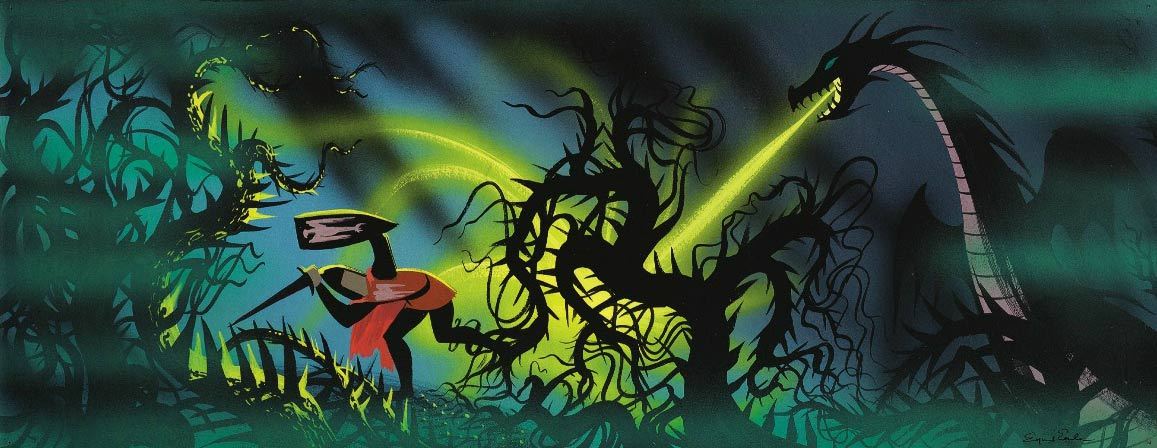
Concept art for Sleeping Beauty (1959) by Eyvind Earle.
"All my foregrounds were tapestry designs of decorative weeds and flowers and grasses. And since it is obvious that the Gothic style and detail evolved from the Arabic influence acquired during the Crusades, I found it perfectly permissible to use all the wonderful patterns and details found in Persian miniatures. And since Persian miniatures had a lot in common with Chinese and Japanese art, I felt it was OK for me to inject quite a bit of Japanese art, especially in the closeup of leaves and overhanging branches." - Eyvind Earle


I love love love this concept art, to me it perfectly encapsulates the essence of what concept artwork is about - telling a story in pictures, giving a sense of the film to come but not sticking directly to the final aesthetic style. The scenes are highly emotive and key points in the narrative, either showing important locations or pivotal plot points being acted out. The colours are rich and in this particular work the landscapes are very 2D picturesque, with hard edges and angles. It almost looks like a tapestry!
All pictures and quote source: http://cartoonbrew.tumblr.com/post/103477646877/concept-art-gallery-eyvind-earle-the-value-of
"All my foregrounds were tapestry designs of decorative weeds and flowers and grasses. And since it is obvious that the Gothic style and detail evolved from the Arabic influence acquired during the Crusades, I found it perfectly permissible to use all the wonderful patterns and details found in Persian miniatures. And since Persian miniatures had a lot in common with Chinese and Japanese art, I felt it was OK for me to inject quite a bit of Japanese art, especially in the closeup of leaves and overhanging branches." - Eyvind Earle
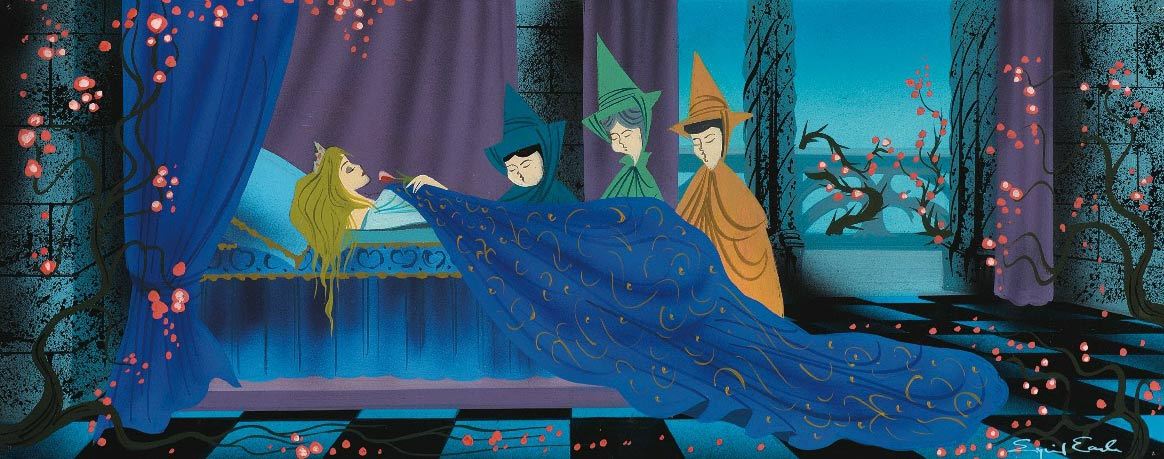
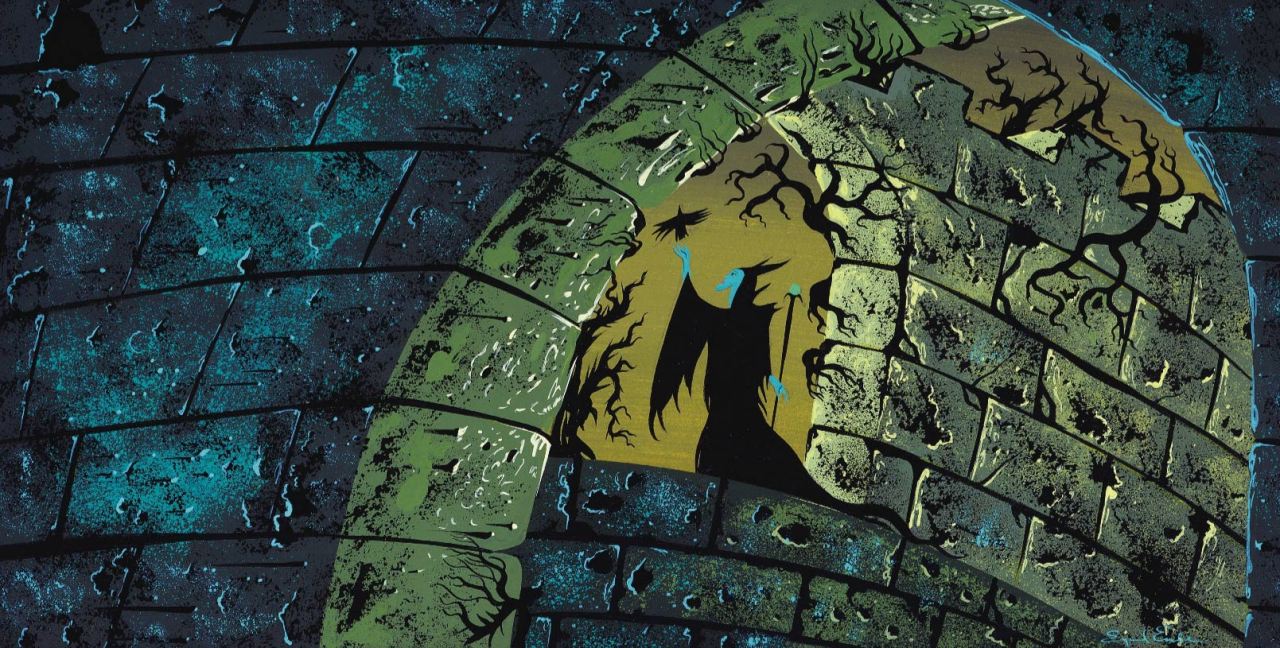
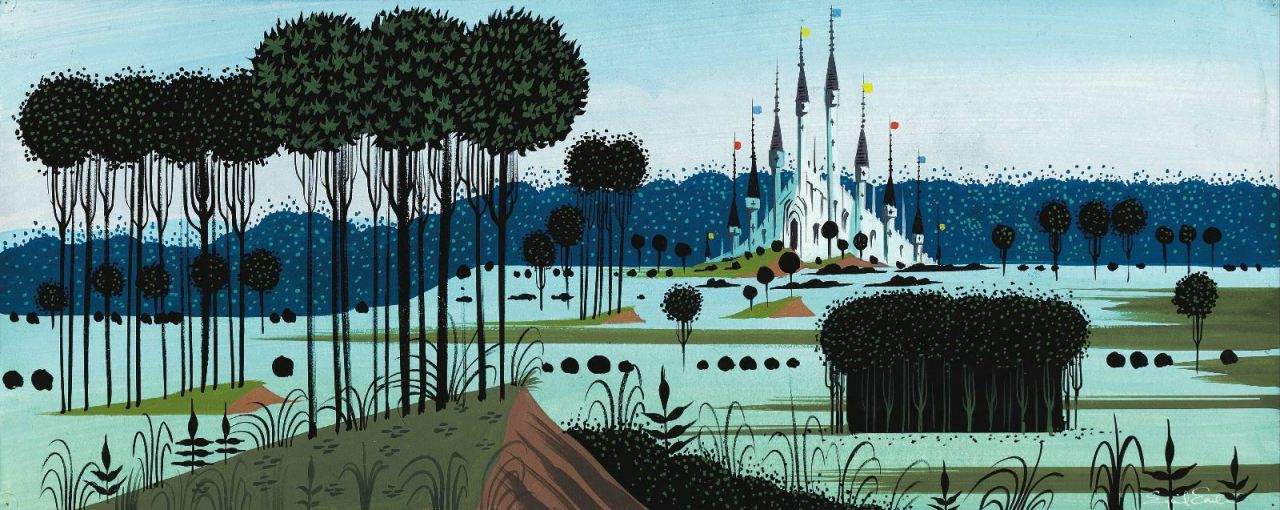
I love love love this concept art, to me it perfectly encapsulates the essence of what concept artwork is about - telling a story in pictures, giving a sense of the film to come but not sticking directly to the final aesthetic style. The scenes are highly emotive and key points in the narrative, either showing important locations or pivotal plot points being acted out. The colours are rich and in this particular work the landscapes are very 2D picturesque, with hard edges and angles. It almost looks like a tapestry!
All pictures and quote source: http://cartoonbrew.tumblr.com/post/103477646877/concept-art-gallery-eyvind-earle-the-value-of
Walt Disney's 'How to Train an Animator'
Source: lettersofnote.com/2010/06/how-to-train-animator-by-walt-disney
(and full transcript!)


In other words, a good animator combines all these qualities:
Good draughtsmanship
Knowledge of caricature, of action as well as features.
Knowledge and appreciation of acting
Ability to think up gags and put over gags
Knowledge of story construction and audience values
Knowledge and understanding of all the mechanical and detailed routine involved in his work, in order that he may be able to apply his other abilities without becoming tied up in a knot by lack of technique along these lines."
(and full transcript!)


A letter from Walt to Don Graham (Chounaird Art Institute) Dec.23 1935 asking him to work out a systematic training course for animators.Dated December 23, 1935 these ideas are no less relevant today.
"Naturally the first most important thing for any animator to know is how to draw. Therefore it will be necessary that we have a good life drawing class."
"I have found that men respond much more readily to classes dealing with practical problems than to more theoretic treatment."
"It wouldn’t be bad if you made up a list of the qualifications of an animator in order of importance. The list should start with the animators ability to draw; then, ability to visualize action, breaking it down into drawings and analyze the movement the mechanics of the action. From this point, we would come to his ability to caricature action – to take a natural human action and see the exaggerated funny side of it – to anticipate the effect or illusion created in the mind of the person viewing that action. It is important also for the animator to be able to study sensation and to feel the force behind sensation, in order to project that sensation. Along with this, the animator should know what creates laughter – why do things appeal to people as being funny.
In other words, a good animator combines all these qualities:
Good draughtsmanship
Knowledge of caricature, of action as well as features.
Knowledge and appreciation of acting
Ability to think up gags and put over gags
Knowledge of story construction and audience values
Knowledge and understanding of all the mechanical and detailed routine involved in his work, in order that he may be able to apply his other abilities without becoming tied up in a knot by lack of technique along these lines."
"I have often wondered why, in your life drawing class, you don’t have your men look at the model and draw a caricature of the model, rather than an actual sketch. But instruct them to draw the caricature in good form, basing it on the actual model."


1 December 2014
Hercules by Andreas Deja
Source: Deja, A. (2014). Deja View: "I'm an Action Figure". [online] Andreasdeja.blogspot.ca. Available at: http://andreasdeja.blogspot.ca/2014/10/im-action-figure.html [Accessed 1 Dec. 2014].


"When I animated this scene with Hercules I was able to benefit from some live action reference.
The actor who went through the motion in front of a video camera was Robert Gant.-Andreas Deja
I received a layout package which included these two enlarged print-outs from the footage. Before animating I studied Robert’s acting and actions on a TV monitor. At the same time I drew a series of thumbnail sketches as I was searching for the key poses.
I remember the live action footage being excellent, and I used most of what Robert was doing. But by not tracing photostats it is still necessary to digest the scene in your head and make it your own.
Here are the rough key poses from the scene:"
21 November 2014
Making Snow in Disney's Frozen
Source: itsartmag.com/features/making-snow-in-disneys-frozen/
This video is from the Walt Disney Animation Studios in Burbank. It is a very technical description of how the snow effects are made in the 3D CG film Frozen (2013)
Frozen - A Material Point Method For Snow... by itsartmag
It's not terribly useful for the particular animation that I am doing at the moment, but the way i see it the more tutorials, videos and media of all sorts i consume, the bigger inspiration bank I will have in my mind to draw from. The amount of work that went into creating the physics for this element is really impressive!

11 November 2014


10 November 2014
Medusa from The Rescuers
Frame by frame drawings of Madame Medusa by Milt Kahl. Again, he creates a believable yet cartoonish person in his drawing. Her expressions are stretched and exaggerated, with her mouth much wider open than a human mouth would normally allow, and her eyes so wise they bore into the back of her head. Her arms and fingers are so spindly and look like they could snap easily, and her skin is pulled taught across her face and neck to show her age and declining looks.
Source: http://2dtraditionalanimation.tumblr.com/post/99708258900/medusa-milt-kahl

Source: http://2dtraditionalanimation.tumblr.com/post/99708258900/medusa-milt-kahl

Treasure Planet Character Design

I love their roughness and their suggestion of form and posture underneath the baggy clothes, The hair over his face is forgiving, without having to show too much detail.
By Glen Keane
Concept Art from Monsters, Inc.

Source: disneyconceptsandstuff.tumblr.com/post/102219297046/character-designs-from-monsters-inc-by-nicolas

These character design/concept art pieces by Carter Goodrich are even less coloured than the previous ones, and instead rely more heavily on shading and depth to convey a sense of atmosphere rather than actual form. They are pencil sketches, but intricately done, and give the additional information of the environments that the characters might appear in or the actions they will partake in. Pieces like these would be great to use in a pitch of the story, to communicate the feel and the purpose of the tale.
Source: disneyconceptsandstuff.tumblr.com/post/102220778355/character-designs-from-monsters-inc-by-carter


For neither of the above images to I have a credit for the actual artist, as it was not listed on the course site I found them on. They are taken from the visual development stage of the film, when basic setting, character, colour key etc ideas were being formulated. The picture is roughly done, in pen and marker it seem,s with just enough detail, colour and shading to suggest the look of the scene in the final finished film. Images like these might also be the kind to appear on a storyboard, as they have basic blocking included and very decisive camera angles.
Source: disneyconceptsandstuff.tumblr.com/post/102224963929/visual-development-from-monsters-inc


All of the above images are colour keys by Dominique Louis. They are painted with either pastel or chalk it seems, to give rich and complete tones to the images. These keys show the atmosphere of each scene, without the drawings being terribly intricate. It gives and sense of the mise-en-scene. In some shots, the blue colours suggest night time, loneliness, isolation and the urban, while the ones with warmer pink and golden tones are more inviting, and we expect it to be a happier scene. Yet all of these examples show the mood without even featuring actors, dialogue or plot.

Subscribe to:
Posts (Atom)